
 By Admin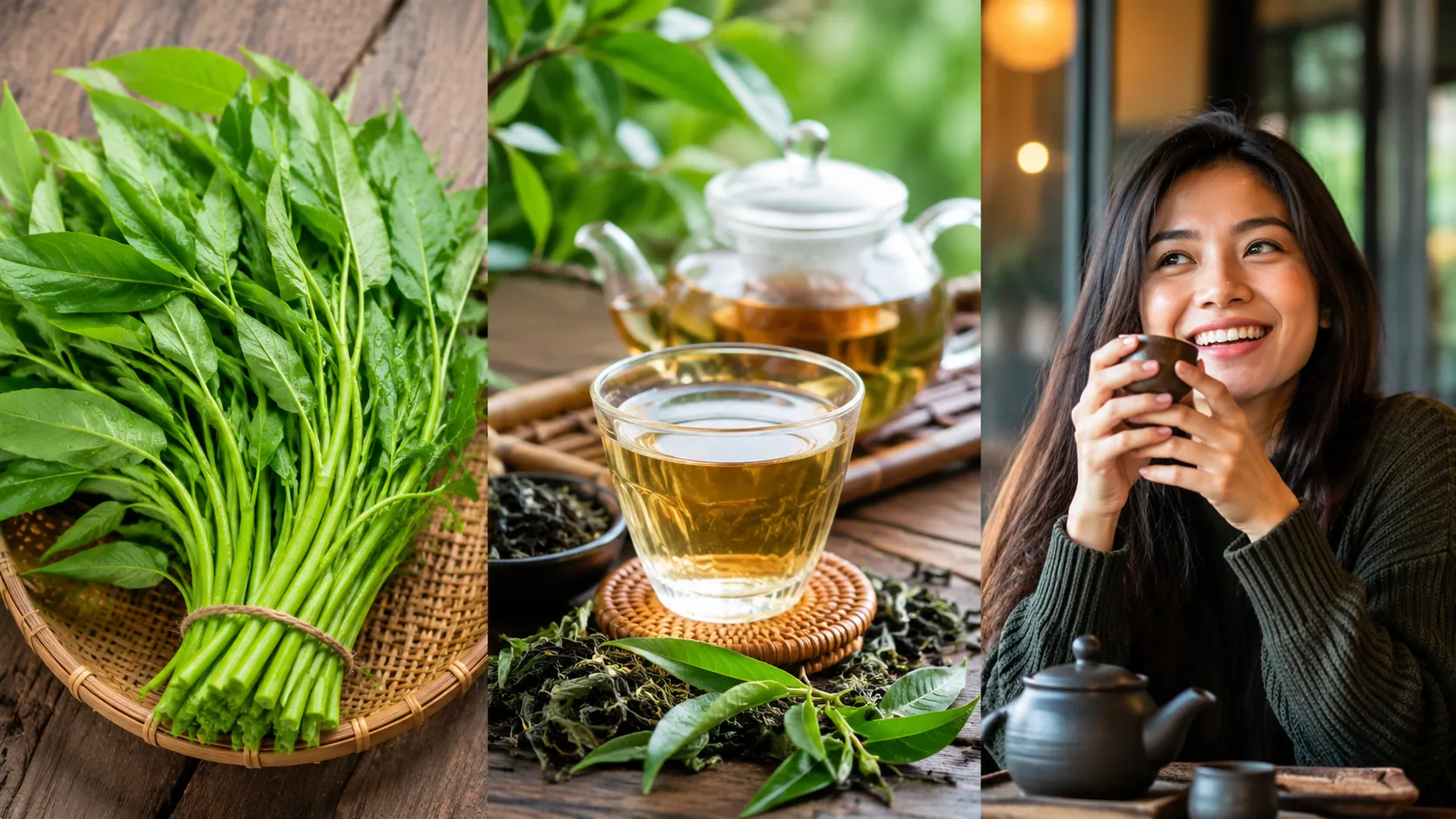
Yalla Choy is one of those unusual terms that can confuse readers at first because it appears online as a leafy green vegetable, a tea culture phrase, and sometimes even a modern slang-style expression. If you searched for what is Yalla Choy, you probably found different answers from different websites. Some describe it as a water spinach-style green, some connect it with kangkong or ong choy, while others explain it as a lifestyle phrase linked to tea, wellness, and global culture.
That mixed meaning is exactly why this guide matters. Instead of forcing one definition, this article gives a clear, practical, and balanced explanation of Yalla Choy meaning, its possible origin, its link with Asian leafy greens, its nutrition, benefits, recipes, buying tips, growing advice, and its role in digital culture. You will also learn whether “yalla choyd” is a different term or simply a common spelling mistake.
What Is Yalla Choy? Quick Meaning Explained
The simplest answer is this: Yalla Choy is not a fully standardized term. In food-related content, Yalla Choy is often used for a leafy green vegetable that resembles or is associated with water spinach, kangkong, ong choy, Chinese water spinach, or Ipomoea aquatica. In lifestyle or language content, it may be used as a playful phrase combining the energy of “yalla” with the calm, social feeling of tea or choy culture.
This is why the phrase has multiple interpretations. When someone asks, “Is Yalla Choy a food or phrase?”, the best answer is: it depends on context. If the discussion is about cooking, markets, gardening, or nutrition, it likely refers to a green leafy vegetable. If the discussion is about lifestyle, branding, cafés, captions, or social media, it may refer to a modern expression or tea culture trend.
A smart way to understand it is:
Yalla Choy is a mixed-use online term, not one fixed dictionary word.
That makes it important to check what the writer, seller, or recipe actually means before buying, cooking, or growing it.
Is “Yalla Choyd” the Same as Yalla Choy?
The term “yalla choyd” appears to be a misspelling or typo variant of Yalla Choy. There is no strong reason to treat Yalla Choyd as a separate vegetable, brand, or official phrase. Most search results, competitor pages, and related content use the spelling Yalla Choy.
This matters for SEO because users may type yalla choyd by mistake when they are actually looking for Yalla Choy meaning, Yalla Choy benefits, or how to cook Yalla Choy. A helpful article should mention the typo naturally, but the main focus should remain on the correct phrase: Yalla Choy.
The Meaning of “Yalla” and “Choy”
To understand Yalla Choy origin, it helps to break the phrase into two parts. “Yalla” is widely used in Arabic-influenced casual speech and commonly means “let’s go,” “come on,” “hurry up,” or “move.” It carries energy, action, and encouragement. You may hear it in daily conversation, sports, travel, social settings, or online captions.
The second part, “choy,” is often connected with Asian vegetable names such as bok choy, yu choy, choy sum, and pak choi. In food culture, choy is commonly associated with greens or vegetables. This is one reason many people connect Yalla Choy with Asian leafy greens.
However, some lifestyle writers also connect choy with tea culture, partly because words like cha, chai, and tea-related expressions are used across many cultures. That does not mean Yalla Choy has one official tea meaning, but it explains why some pages describe it as a tea-based lifestyle phrase.
So, when people ask “what does Yalla mean?” and “what does Choy mean?”, the combined phrase can be understood in three broad ways: an energetic phrase, a food-related term, or a fusion lifestyle idea.
Is Yalla Choy a Vegetable, a Phrase, or a Tea Trend?
The most accurate answer is that Yalla Choy can be used in more than one way. This is the biggest reason the keyword has become confusing and interesting.
As a vegetable, Yalla Choy is usually discussed as a leafy green, especially one linked with water spinach, kangkong, ong choy, or similar fast-cooking greens. In this context, people search for Yalla Choy nutrition, Yalla Choy recipes, Yalla Choy benefits, and how to grow Yalla Choy at home.
As a phrase, it feels like a modern, mixed-language expression. The word Yalla gives it movement and energy, while Choy gives it a food, drink, or cultural flavor. This makes it useful for social media captions, café branding, lifestyle campaigns, or playful digital content.
As a tea culture trend, Yalla Choy can suggest a moment of pause, refreshment, conversation, and connection. In that sense, it works as a fusion between movement and calmness: “let’s go” meets “let’s have tea.”
That flexibility is why the article should not say that Yalla Choy has only one meaning.
Yalla Choy as a Leafy Green: Water Spinach, Kangkong, or Ong Choy?
In food content, Yalla Choy is most often connected with water spinach, also known as kangkong, kangkung, ong choy, Chinese water spinach, river spinach, swamp cabbage, water morning glory, or rau muong. The plant commonly linked with these names is Ipomoea aquatica, a fast-growing semi-aquatic plant known for hollow stems, tender leaves, and quick cooking.
This green is popular in many parts of Southeast Asia, East Asia, and South Asia. It appears in home cooking across countries and food cultures where quick stir-fried greens, noodle dishes, soups, and rice bowls are common. Because it grows well in warm moist conditions, it is often associated with tropical and subtropical climates.
Still, one important point must be clear: Yalla Choy is not a widely standardized botanical name. If you are shopping at a market, it is better to ask for water spinach, kangkong, ong choy, or Chinese water spinach instead of relying only on the name Yalla Choy. This reduces confusion and helps you buy the correct green.
Yalla Choy vs Bok Choy vs Yu Choy vs Ong Choy
Many users confuse Yalla Choy vs Bok Choy because the names sound similar. But these greens are not always the same. The table below explains the difference in a simple way.
| Name | Common Identity | Texture and Taste | Best Use | Same as Yalla Choy? |
| Yalla Choy | Mixed-use term; often linked online with water spinach | Mild, leafy, crisp if treated as water spinach | Stir-fries, soups, noodles | Depends on context |
| Water Spinach | Ipomoea aquatica | Hollow stems, tender leaves, fresh crunch | Garlic stir-fry, soups, rice dishes | Often linked with Yalla Choy |
| Kangkong / Kangkung | Regional name for water spinach | Soft leaves, crunchy stems | Southeast Asian cooking | Often linked with Yalla Choy |
| Ong Choy | Chinese name often used for water spinach | Hollow stems, mild flavor | Stir-fry with garlic or fermented tofu | Often linked with Yalla Choy |
| Bok Choy / Pak Choi | Chinese cabbage-type green | Thick white or green stalks, mild cabbage flavor | Stir-fries, soups, steaming | Not the same plant |
| Yu Choy | Chinese flowering green | Tender stems, slightly sweet taste | Sautéing, steaming | Different green |
| Choy Sum | Flowering brassica green | Tender, mild, lightly sweet | Chinese cooking | Different green |
This comparison solves one major search pain point: Yalla Choy is not automatically bok choy. If a recipe means water spinach, using bok choy will change the texture and cooking time. Bok choy has thicker stems and a cabbage-like structure, while water spinach has long hollow stems and more delicate leaves.
What Does Yalla Choy Taste Like?
When Yalla Choy is used as a food term for water spinach-style greens, it is usually described as mild, fresh, and slightly sweet. The leaves become soft after cooking, while the stems can stay pleasantly crisp if not overcooked. This gives the dish a nice balance of tender leaves and crunchy stems.
The flavor is not usually bitter or overpowering. That makes it easy to pair with bold ingredients like garlic, ginger, chili, soy sauce, oyster sauce, fish sauce, sesame oil, or fermented bean curd. In simple dishes, it works as a fresh green side. In richer meals, it can balance noodles, rice, tofu, eggs, chicken, shrimp, pork, or grilled fish.
Because of its quick-cooking nature, Yalla Choy-style greens are best when cooked fast over medium-high or high heat. Overcooking can make the leaves dull and the stems soggy.
Yalla Choy Nutrition and Health Benefits
Many people search for Yalla Choy benefits because leafy greens are often linked with healthy eating. If Yalla Choy is being used to describe water spinach-style greens, then its nutrition profile is usually discussed in terms of low calories, high water content, dietary fiber, vitamins, minerals, and antioxidants.
Some nutrition summaries for water spinach-style greens describe them as having around 13–20 kcal per 100 gm, about 1.5 g protein, 2.2–3.2 g carbohydrates, 1 g dietary fiber, and very little fat, sometimes around 0.2 g. They are also commonly associated with vitamin A, vitamin C, vitamin K, calcium, iron, magnesium, potassium, beta-carotene, flavonoids, and phytonutrients.
These nutrients may support a balanced diet in several simple ways. Vitamin A is commonly connected with eye health, vitamin C with immune system support and skin health, and fiber with digestive health and fullness. Calcium and vitamin K are often discussed in relation to bone health, while iron supports normal oxygen transport in the body.
However, it is important not to exaggerate. Yalla Choy is not a miracle food. It can be part of a healthy diet, but it should not be presented as a cure for disease. People with kidney stone concerns or oxalate-sensitive diets should be cautious with leafy greens and follow personal medical advice.
Food Safety: Can You Eat Yalla Choy Raw?
Some people ask, “Can I eat Yalla Choy raw in a salad?” If the leaves are young, clean, and properly handled, some leafy greens can be eaten raw. But if Yalla Choy refers to water spinach or another aquatic-style green, extra care is smart.
Because water spinach-style greens may grow in moist or aquatic environments, they should be washed very well. Rinse them under running water, remove dirt, sand, grit, and small insects, and trim tough ends before cooking. When unsure, cooking is the safer choice because heat helps reduce common food safety risks and improves texture.
A simple rule is: when the exact source is unclear, wash carefully and cook thoroughly. This is especially important for children, older adults, pregnant people, or anyone with a sensitive stomach. The goal is not to create fear, but to handle fresh greens responsibly.
How to Buy, Choose, Clean, and Store Yalla Choy
If you want to buy Yalla Choy, the best place to start is an Asian grocery store, Asian supermarket, farmers’ market, or local market that sells fresh greens. Since the name Yalla Choy may not be familiar to every seller, ask for water spinach, kangkong, ong choy, Chinese water spinach, or rau muong.
Choose bunches with bright green leaves, firm stems, and a fresh smell. Avoid leaves that look yellow, wilted, slimy, blackened, or sour-smelling. Fresh Yalla Choy-style greens should look lively and crisp, not tired or mushy.
To clean them, rinse well under running water. If the stems are long, cut them into shorter pieces. Many cooks separate the stems and leaves because stems need slightly more time in the pan. This helps keep the leaves soft and the stems crisp.
For storage, wrap the greens loosely in a paper towel and place them in a produce bag or container in the fridge. Some sources suggest using them within 1 to 3 days for best freshness, while others say they may last 5 to 7 days if stored properly. For best flavor and texture, cook them as soon as possible.
How to Cook Yalla Choy
The easiest way to cook Yalla Choy is a quick garlic stir-fry. This method keeps the leaves bright and the stems crisp. Start with one bunch of Yalla Choy-style greens, wash it well, and separate stems from leaves. Heat 1 tablespoon cooking oil, add 2 cloves garlic or 3 to 5 garlic cloves if you like stronger flavor, then stir-fry the stems first for about one minute. Add the leaves, then season with 1 teaspoon soy sauce, oyster sauce, or a small amount of salt.
The whole dish can cook in under 5 minutes, and many cooks prefer a 2–4 minute stir-fry or blanching time to keep the color fresh. A large bunch may shrink into two or three servings, especially after stir-frying.
You can also use Yalla Choy in soups and broths. Add it near the end so it does not become too soft. For a simple soup, use about 4 cups broth or water, then add garlic, ginger, chili, tofu, eggs, chicken, or shrimp. If you enjoy stronger Asian flavors, try it with fermented tofu, fermented bean curd, sesame oil, or fish sauce.
Yalla Choy also works in noodle bowls, fried rice, rice dishes, curries, wraps, and even green smoothies when the leaves are young and clean. The key is timing: cook it quickly, avoid overcrowding the pan, and do not let it turn soggy.
Best Substitutes for Yalla Choy
If you cannot find Yalla Choy, choose a substitute based on the recipe. For stir-fries, water spinach, ong choy, or kangkong are the closest options if available. If you need a common grocery store substitute, bok choy, yu choy, choy sum, spinach, Swiss chard, or mustard greens can work.
The substitute will change the final dish slightly. Bok choy gives thicker stems and a cabbage-like bite. Spinach cooks much faster and becomes softer. Swiss chard has a stronger earthy flavor. Yu choy and choy sum are closer to Asian-style cooking but still different from hollow-stem water spinach.
For best results, match the substitute to the cooking method. Use crisp-stem greens for stir-fries and softer greens for soups, noodles, and rice bowls.
Can You Grow Yalla Choy at Home? Rules and Growing Tips
Many readers search how to grow Yalla Choy at home, especially if they enjoy fresh leafy greens. If you are growing the water spinach-style plant linked with Ipomoea aquatica, it usually prefers warm moist conditions, fertile soil, regular watering, and good sunlight.
Some growing guides suggest a temperature range around 20 °C to 35 °C, soil pH around 5.5 to 7.0, and about 4–6 hours of direct sunlight. Seeds may be planted around 1–2 cm deep and may germinate in 5–10 days. Stem cuttings around 5–6 inches may also root well in moist conditions. Plant spacing of around 6–8 inches can help the greens grow without overcrowding, and harvesting may begin in about 3–4 weeks under good conditions.
You can grow it in containers, raised beds, or garden beds with compost-rich soil. Some gardeners use vermicompost, balanced fertilizer, mulch, and natural pest control like neem oil spray for aphids, snails, and caterpillars.
But there is one important warning: water spinach may be regulated in some regions because of invasive potential. Before growing it, check local agriculture rules, invasive plant lists, or permit requirements. Container growing may reduce spread, but it does not replace local legal guidance.
Yalla Choy in Tea Culture, Lifestyle, and Social Media
Beyond food, Yalla Choy tea culture is another interesting angle. In this meaning, the phrase works less like a vegetable name and more like a lifestyle expression. It blends the energy of “yalla” with the social, calming image of tea, cafés, conversation, and daily rituals.
This is why Yalla Choy lifestyle content may connect the phrase with wellness, mindful consumption, hospitality, relaxation, balance, and social connection. It can sound like a café concept, a beverage brand, or a catchy caption for people who enjoy global expressions.
In digital culture, short mixed-language phrases often spread because they are memorable. Yalla Choy has that quality. It sounds active, friendly, and unusual. A café might use it to mean “let’s have tea.” A social media user might use it as a playful caption. A food blogger might use it for a fusion recipe. A wellness brand might use it for a tea-based lifestyle campaign.
This does not make it an official phrase, but it does explain why the keyword can appear in different types of content.
Common Myths and Mistakes About Yalla Choy
The biggest mistake is thinking Yalla Choy has only one meaning. It does not. The meaning changes depending on whether the context is food, language, tea culture, or online branding.
Another mistake is assuming Yalla Choy is always bok choy. The word choy appears in many Asian vegetable names, but bok choy, yu choy, choy sum, and ong choy are not all the same. If a page connects Yalla Choy with water spinach, then bok choy is only a substitute, not an exact match.
A third mistake is treating Yalla Choy as an official scientific name. If you need accuracy, look for the actual plant identity, such as Ipomoea aquatica for water spinach-style greens.
People also make cooking mistakes. Overcooking can make the leaves dull and the stems soggy. Not washing properly can leave grit or dirt. Growing without checking local rules can also be risky if the plant is regulated in your area.
The best approach is simple: verify the context, confirm the plant name, wash it well, cook it quickly, and avoid exaggerated health claims.
FAQs
What does Yalla Choy mean?
Yalla Choy is a mixed-use term. It may refer to a leafy green vegetable, a tea culture idea, or a playful phrase depending on context.
Is Yalla Choy a real word?
It is used online, but it is not a widely standardized dictionary term or official botanical name.
Is Yalla Choy the same as water spinach?
Many food pages connect Yalla Choy with water spinach, kangkong, or ong choy, but you should verify the exact plant name when buying.
Is Yalla Choy the same as bok choy?
No, not usually. Bok choy is a different Asian green with thicker stalks and a cabbage-like structure.
How do you cook Yalla Choy?
The easiest method is a quick garlic stir-fry with oil, garlic, soy sauce, and optional chili. Cook it quickly for about 2–4 minutes.
Where can I buy Yalla Choy?
Look in Asian grocery stores, farmers’ markets, or supermarkets with international produce. Ask for water spinach, kangkong, ong choy, or Chinese water spinach.
Can you grow Yalla Choy at home?
Yes, in the right warm and moist conditions, but check local rules first because water spinach-style plants may be regulated in some regions.
Is “Yalla Choyd” a spelling mistake?
Most likely, Yalla Choyd is a typo or spelling variation of Yalla Choy.
Conclusion:
Yalla Choy meaning depends on context. In food content, it usually points toward a leafy green linked with water spinach, kangkong, ong choy, or Ipomoea aquatica. In lifestyle content, it may describe a tea culture trend, a social expression, or a catchy phrase for digital branding.
The most important thing is not to assume one fixed meaning. If you are cooking, buying, or growing it, confirm the actual plant name. If you are using it in lifestyle or social media content, understand it as a flexible phrase with energy, culture, and modern appeal.
In simple words, Yalla Choy is best understood as a modern mixed-use term: part food, part phrase, and part cultural trend.
Disclaimer
This article is for general informational purposes only. The information shared is meant to help readers better understand the topic, but individual results, preferences, availability, and personal situations may vary. Readers should use their own judgment and verify details when needed.