
 By Admin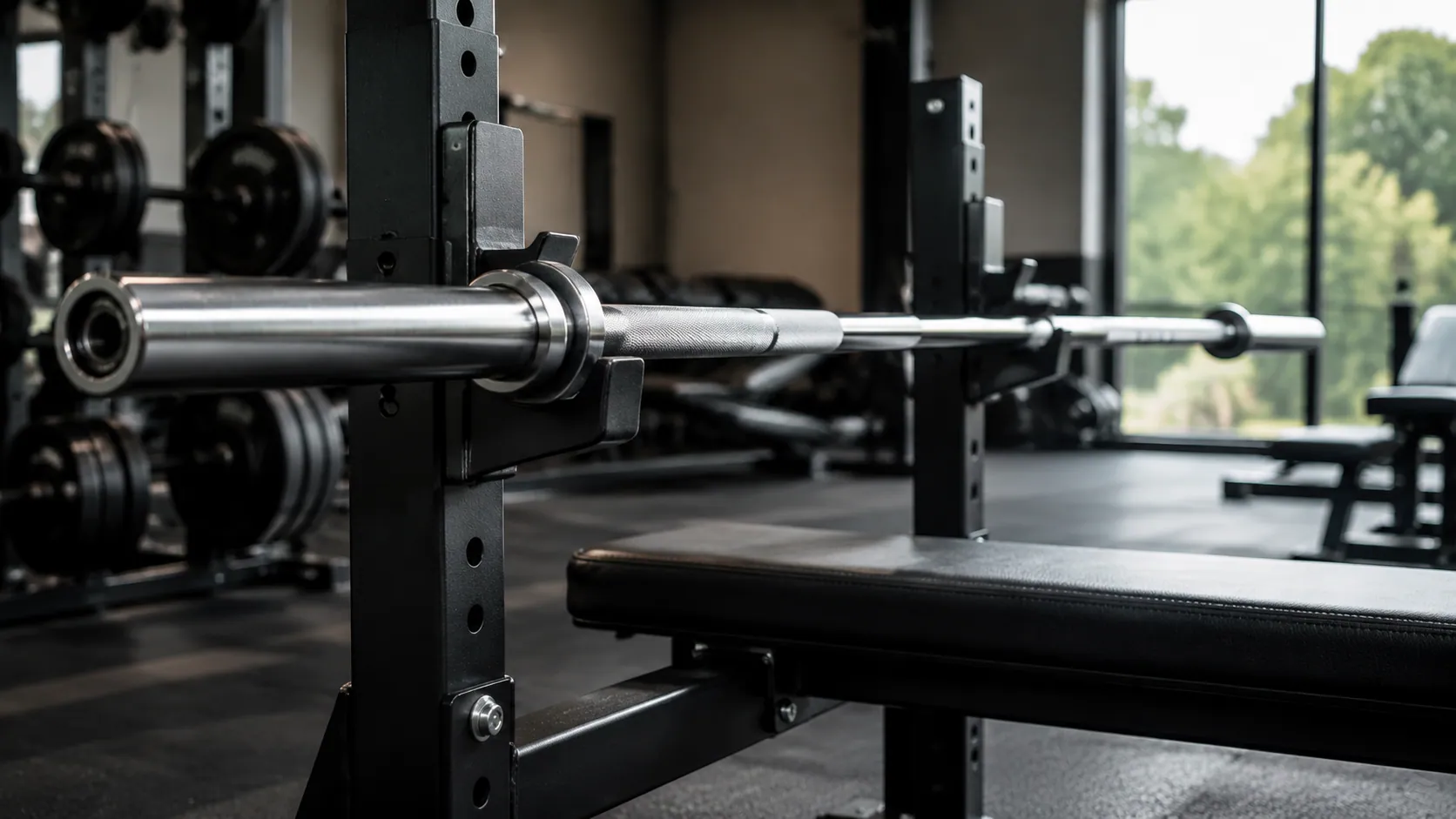
How much does the bench press bar weigh? In most commercial gyms, a standard bench press bar weighs 45 pounds, or about 20 kilograms, before you add any plates. That means if you are bench pressing with an empty Olympic barbell, you are already lifting 45 lb, not zero.
However, the full answer is a little more detailed. Not every bench press bar, barbell, or Smith machine bar weighs the same. Some bars are lighter, some are shorter, and some are designed for women, beginners, home gyms, Olympic weightlifting, or specialty training. If you want to track your total weight lifted accurately, you need to know whether you are using a standard Olympic barbell, a women’s Olympic bar, a home gym bar, or a counterbalanced Smith machine bar.
This guide explains the exact bench press bar weight, how to count the bar, how to calculate your total bench press, and how to tell what your gym bar weighs.
How Much Does a Bench Press Bar Weigh?
A standard bench press bar usually weighs 45 pounds, which is commonly rounded from the metric Olympic barbell weight of 20 kg. Technically, 20 kg equals about 44.1 pounds, but in most U.S. gyms, lifters simply call it a 45 lb bar.
So, when someone asks, “how much does a bench press bar weigh without weights?”, the most common answer is:
A standard Olympic bench press bar weighs 45 lb / 20 kg.
This is the bar you will usually find on a flat bench press station, inside a power rack, or on a regular bench press rack in a commercial gym. It is normally around 7 feet long and has rotating sleeves on each end where you load Olympic weight plates.
But this answer is not universal. Some bars weigh 33 lb, 35 lb, 25 lb, or even less depending on the type of equipment. A Smith machine bar may feel lighter because it can be counterbalanced. A standard home gym bar may use 1-inch diameter sleeves and may not weigh the same as a commercial Olympic barbell.
That is why the safest answer is: most bench press bars weigh 45 pounds, but you should check the bar type if you are unsure.
Bench Press Bar Weight Chart by Bar Type
Different bars are made for different lifting styles. A powerlifter, beginner, home gym owner, and Olympic weightlifter may all use different barbells. Here is a quick chart to help you compare the most common types.
| Bar Type | Common Weight | Common Use |
| Men’s Olympic barbell | 45 lb / 20 kg | Bench press, squat, deadlift, Olympic lifts |
| Power bar | 45 lb / 20 kg | Heavy bench press, squat, deadlift |
| Women’s Olympic barbell | 33 lb / 15 kg | Olympic lifting, smaller hands, technique work |
| Standard home gym barbell | 15–25 lb, varies | Home gyms, beginner weight sets |
| Technique bar | 5–15 kg | Learning form and movement patterns |
| EZ curl bar | 15–30 lb, varies | Biceps curls, triceps extensions |
| Smith machine bar | 15–45 lb, varies | Guided bench press and machine pressing |
| Specialty bars | Varies widely | Safety squat, Swiss bar, trap bar, cambered bar |
The main point is simple: barbell weight depends on the bar type. If you are using a free-weight Olympic barbell on a normal bench press, assume 45 lb / 20 kg unless the bar is clearly marked otherwise.
Are All Bench Press Bars 45 Pounds?
No, not all bench press bars are 45 pounds. Most standard Olympic bars in commercial gyms are 45 lb, but several common exceptions exist.
A women’s Olympic bar usually weighs 15 kg / 33 lb. It is typically shorter and has a thinner shaft, often around 25 mm, which can make it easier to grip for lifters with smaller hands. A standard barbell in a home gym set may weigh much less than 45 lb, especially if it is shorter or made for basic beginner weight plates.
Smith machine bars are another major exception. A Smith machine bar is attached to a guided track, and some machines use a counterbalance system. That means the bar may not feel like a full 45 lb Olympic bar. Depending on the machine, the effective starting weight may be closer to 15 lb, 25–30 lb, or sometimes near 45 lb.
Specialty bars also vary. A Swiss bar, football bar, trap bar, safety squat bar, cambered bar, deadlift bar, or axle bar may have a different weight, shape, diameter, and purpose.
So, while 45 pounds is the most common answer, the better answer is: most regular bench press bars are 45 lb, but not every gym bar is the same.
Olympic Barbell vs Standard Barbell
One reason people get confused about standard bench press bar weight is that the word “standard” can mean different things.
In many gyms, people say “standard bar” when they mean a regular Olympic barbell. This type of bar is usually 7 feet long, weighs 45 lb / 20 kg, and has 2-inch sleeves for Olympic weight plates. It is the bar most people use for the bench press, squat, deadlift, overhead press, and other strength training exercises.
But in home gym equipment, a “standard barbell” often means a smaller bar with 1-inch diameter sleeves. These bars are usually lighter, shorter, and designed for standard plates rather than Olympic plates. Some may weigh around 15–25 lb, while others vary depending on the brand and length.
The difference matters because plate compatibility changes too. Olympic bars use plates with larger center holes, while standard bars use smaller plates. If you are buying equipment for a home gym or garage gym, always check the product specifications instead of assuming the bar weighs 45 lb.
For accurate tracking, remember this rule: Olympic barbell weight is usually 45 lb / 20 kg, while standard home gym barbell weight can vary.
How Much Does a Women’s Bench Press Bar Weigh?
A women’s Olympic barbell usually weighs 33 pounds, or 15 kilograms. It is not a low-quality or beginner-only bar. It is a real Olympic-style bar designed with slightly different dimensions.
A women’s bar is usually shorter than a men’s Olympic bar and often has a thinner shaft, commonly around 25 mm. This can improve grip comfort, especially for people with smaller hands. It is often used in Olympic weightlifting movements such as the snatch and clean and jerk, but it may also be used for bench press, overhead press, rows, or other barbell exercises.
If you are bench pressing with a women’s Olympic bar, your empty bar weight is usually 33 lb / 15 kg, not 45 lb / 20 kg. That matters when calculating your total weight lifted.
For example, if you put one 25 lb plate on each side of a women’s bar, the total is 83 lb, not 95 lb. Small differences like this can affect your workout log, strength progress, and personal best tracking.
How Much Does a Smith Machine Bench Press Bar Weigh?
A Smith machine bench press bar does not always weigh 45 pounds. In fact, this is one of the most confusing areas for beginners because Smith machines vary widely.
A Smith machine bar moves on a guided track, which changes the movement compared with a free-weight bench press. Some machines are also counterbalanced, meaning part of the bar’s weight is offset by cables, pulleys, or counterweights. Because of this, the bar may feel much lighter than a normal Olympic barbell.
Depending on the machine, the Smith bar’s starting weight may be around 15 lb, 25 lb, 30 lb, or sometimes closer to 45 lb. Some machines have a label that tells you the starting resistance. Others do not.
If you are tracking your lifting numbers seriously, do not automatically treat a Smith machine bench as the same as a free-weight bench press. A Smith machine may let you press more weight because the bar path is fixed and stabilizer muscles do less work. That does not make it useless, but it does mean the numbers are not always directly equal.
The best way to know the exact Smith machine bar weight is to check the machine label or ask gym staff.
Should You Count the Bar When Bench Pressing?
Yes, you should count the bar when bench pressing. The bench press weight includes everything you are lifting: the bar plus the plates.
If you bench press an empty Olympic bar, you are benching 45 lb. If you add one 45 lb plate on each side, your total is not 90 lb. It is:
45 lb bar + 45 lb plate + 45 lb plate = 135 lb total
That is why people say “I benched 135” when they are using a 45 lb bar with one 45 lb plate per side.
Counting the bar matters for tracking progress, progressive overload, workout apps, personal records, and accurate training logs. If you only count the plates, your numbers will be wrong. You may think you lifted 90 lb when you actually lifted 135 lb.
This is also important for beginners. Many new lifters feel embarrassed asking whether the bar counts, but it absolutely does. Your body is pressing the full system weight, including the unloaded barbell.
A helpful gym saying is: “If you lift it, count it.”
How to Calculate Bench Press Weight
Calculating bench press weight is simple once you understand the formula.
Total bench press weight = bar weight + plates on the left side + plates on the right side
Most mistakes happen because people forget the bar or only count one side of the plates. Always add both sides.
Here is a simple plate math chart using a standard 45 lb Olympic barbell:
| Bench Setup | Total Weight |
| Empty Olympic bar | 45 lb |
| Bar + one 10 lb plate per side | 65 lb |
| Bar + one 25 lb plate per side | 95 lb |
| Bar + one 45 lb plate per side | 135 lb |
| Bar + two 45 lb plates per side | 225 lb |
| Bar + three 45 lb plates per side | 315 lb |
This is why one plate bench press usually means 135 lb total, two plates bench press usually means 225 lb total, and three plates bench press usually means 315 lb total.
If your gym uses kilograms, the same idea applies. Add the 20 kg bar plus the plates on both sides. For example, a 20 kg bar with one 20 kg plate on each side equals 60 kg total.
Once you learn the formula, you can calculate any bench press setup quickly and avoid guessing.
What “One Plate,” “Two Plates,” and “Three Plates” Mean
Gym language can be confusing when you are new. Lifters often say things like “one plate,” “two plates,” or “three plates” instead of saying the full weight.
In most U.S. gyms, one plate means one 45 lb plate per side on a 45 lb bar. That equals 135 lb total. Two plates means two 45 lb plates on each side, which equals 225 lb total. Three plates means three 45 lb plates on each side, which equals 315 lb total.
These numbers include the bar. So yes, 135 bench includes the bar, and 225 bench includes the bar too.
This language may change slightly in gyms that use kilogram plates. In many metric gyms, a large plate is often 20 kg rather than 45 lb. So instead of assuming, check the plate markings.
Here is the simple idea: when lifters talk about a bench press number, they usually mean the total weight lifted, not just the plates.
How to Tell How Much Your Gym Bar Weighs
If you are unsure how much your gym bar weighs, there are several ways to check without feeling awkward.
First, look at the end cap. Many barbells have a weight-labeled end cap that says 20 kg, 15 kg, or another weight. Some also show the brand or model. If the end cap is missing or blank, look for markings on the shaft or sleeves.
Second, check the bar length and sleeve size. A regular Olympic bar is usually around 7 ft long and has 2-inch sleeves. A smaller home gym bar may be shorter and may have 1-inch diameter sleeves.
Third, ask gym staff. This is normal. You do not have to feel embarrassed. Gym staff are used to questions about equipment, and asking is better than logging the wrong weight.
Fourth, if allowed, use a gym scale or bathroom scale method. Weigh yourself, then weigh yourself holding the bar, and subtract the difference. This is not always perfect, but it can help with unmarked bars.
If you are tracking a serious bench PR, competition prep, or progressive overload, it is worth confirming the bar instead of guessing.
Why Bench Press Bars Can Feel Different
Sometimes two bench press bars can weigh the same but feel different in your hands. This usually happens because of bar design, not because you suddenly got weaker.
A bar with a thicker shaft may feel harder to grip. Many Olympic bars are around 28–29 mm, while some power bars may be around 29 mm or more. A thicker bar can change wrist comfort and grip strength.
Knurling also matters. Aggressive knurling can feel sharper and more secure, while smoother knurling may feel easier on the palms but less grippy. Some bars have center knurling, while others do not.
Bar stiffness can also change the feel. A power bar is usually stiffer with less whip, while Olympic weightlifting bars may have more spin and whip for movements like the snatch and clean and jerk.
The Smith machine can feel different because the bar moves on a guided track. Home gym bars may feel different because they are shorter, lighter, or made with cheaper steel.
For beginners, even the empty bar can feel heavy. That is normal. Bench pressing uses the chest, shoulders, triceps, wrists, elbows, and stabilizer muscles. If the empty bar is too heavy, start with dumbbells, a technique bar, or lighter machine work.
Home Gym Bench Press Bars vs Commercial Gym Bars
A commercial gym usually has Olympic barbells that weigh 45 lb / 20 kg. A home gym may not.
Many beginner home gym sets come with shorter standard bars. These bars often use 1-inch diameter plates and may weigh less than a full Olympic barbell. Some are designed for lighter loads, and their weight capacity may only be around 200–300 pounds or another listed limit.
This matters for both safety and tracking. If you assume your home gym bar weighs 45 lb when it actually weighs 20 lb, your logged bench press number will be inaccurate. If the bar has a low load-bearing capacity, loading it too heavily may also be unsafe.
Before buying or using a home bench press bar, check:
| Feature | Why It Matters |
| Bar weight | Helps calculate total weight lifted |
| Sleeve diameter | Determines plate compatibility |
| Bar length | Affects rack fit and balance |
| Weight capacity | Important for safety |
| Knurling and grip | Affects control and comfort |
For a serious home gym, an Olympic barbell is usually the better long-term choice. For beginners, a lighter bar can still be useful, as long as you know what it weighs.
Beginner Tips Before Adding Plates
If you are new to bench pressing, do not rush to add plates just because other people are lifting more. The empty bar bench press weight is already 45 lb in most gyms, and that can be a real starting weight.
Start by learning proper setup. Your eyes should be under the bar, your feet should be planted, and your shoulder blades should feel stable on the bench. Keep your wrists stacked over your elbows, lower the bar with control, and press smoothly.
If you are unsure, use a spotter or bench inside a power rack with safety arms. A spotter can help you unrack and re-rack the bar safely. Safety arms can protect you if you fail a rep.
Do not compare your first bench press to someone else’s personal best. Strength training is built through consistent practice, accurate tracking, and gradual increases. Adding 5 lb or 10 lb over time is better than jumping too fast and risking shoulder strain, wrist strain, or poor form.
If the bar feels too heavy, that is not failure. Use dumbbells, a technique bar, push-ups, or machine presses until you build enough strength and confidence.
Common Mistakes When Counting Bench Press Weight
The most common mistake is not counting the bar. If you put a 45 lb plate on each side of a 45 lb bar, you lifted 135 lb, not 90 lb.
Another mistake is counting only one side of the plates. Bench press weight includes both sides. If you add a 25 lb plate on the left and a 25 lb plate on the right, that adds 50 lb to the bar.
Some people also assume every bar is 45 lb. As you now know, women’s bars, Smith machine bars, standard home gym bars, EZ curl bars, and technique bars can all weigh different amounts.
Mixing pounds and kilograms is another common issue. A 20 kg bar is about 44 lb, while a 15 kg bar is about 33 lb. If your plates are in kilograms, do not log them as pounds.
Collars can also create confusion. In casual gym training, most people do not count lightweight spring collars. But heavier collars, spin-lock collars, or competition-style collars may add real weight. The most important thing is consistency. Track the same way every time so your progress is clear.
Bench Press Bar Weight in Pounds and Kilograms
If you train in the United States, you will usually hear bench press bar weight described in pounds. The standard answer is 45 lb.
If you train in a metric gym, you will usually hear 20 kg. These numbers are used almost interchangeably, even though 20 kg is technically about 44.1 lb, not exactly 45 lb.
Here are the most useful conversions:
| Weight | Conversion |
| 20 kg bar | About 44.1 lb |
| 45 lb bar | About 20.4 kg |
| 15 kg bar | About 33 lb |
| 33 lb bar | About 15 kg |
| 25 kg total | About 55 lb |
| 60 kg total | About 132 lb |
For everyday gym tracking, rounding is normal. Most lifters call a 20 kg Olympic bar a 45 lb bar, especially in U.S. gyms. But if you are competing or following a precise program, use the unit system your gym uses and keep your log consistent.
Bench Press Bar Weight FAQ
How much does the bench press bar weigh without weights?
A standard Olympic bench press bar weighs 45 lb / 20 kg without plates. This is also called the empty bar, unloaded barbell, or bar-only bench press weight.
Is the bench press bar 45 pounds?
Usually, yes. In most commercial gyms, the regular bench press bar is 45 pounds. But women’s bars, Smith machine bars, technique bars, and home gym bars can weigh less.
Does 135 bench include the bar?
Yes. A 135 lb bench press usually means a 45 lb bar plus one 45 lb plate on each side. The bar is part of the total weight lifted.
Does 225 bench include the bar?
Yes. A 225 lb bench press usually means a 45 lb bar plus two 45 lb plates on each side.
How much does the bar weigh at the gym?
At an average gym, the regular free-weight bench press bar usually weighs 45 lb / 20 kg. If the bar is shorter, thinner, attached to a Smith machine, or unmarked, check the end cap or ask gym staff.
Is a Smith machine bench press the same as a regular bench press?
No. A Smith machine uses a guided track, and some machines have a counterbalanced bar. The movement and effective bar weight can differ from a regular free-weight bench press.
Can beginners bench press just the bar?
Yes. Benching the empty bar is a normal beginner starting point. If 45 lb is too heavy, use dumbbells, a lighter technique bar, or machine presses until your form and strength improve.
Conclusion
So, how much does the bench press bar weigh? In most gyms, the standard bench press bar weighs 45 pounds, or about 20 kilograms. That weight should be counted when you log your bench press because your body is lifting the bar plus the plates.
Still, not every bar is the same. A women’s Olympic bar is usually 33 lb / 15 kg, a Smith machine bar can vary, and a home gym standard bar may be much lighter than a commercial Olympic barbell. If you are unsure, check the end cap, bar markings, sleeve size, or ask gym staff.
Disclaimer: Yeh maloomat sirf general fitness guidance ke liye hai. Har gym bar ka wazan different ho sakta hai. Accurate weight ke liye bar label check karein ya gym staff se poochein. Exercise se pehle proper form aur safety follow.