
 By Admin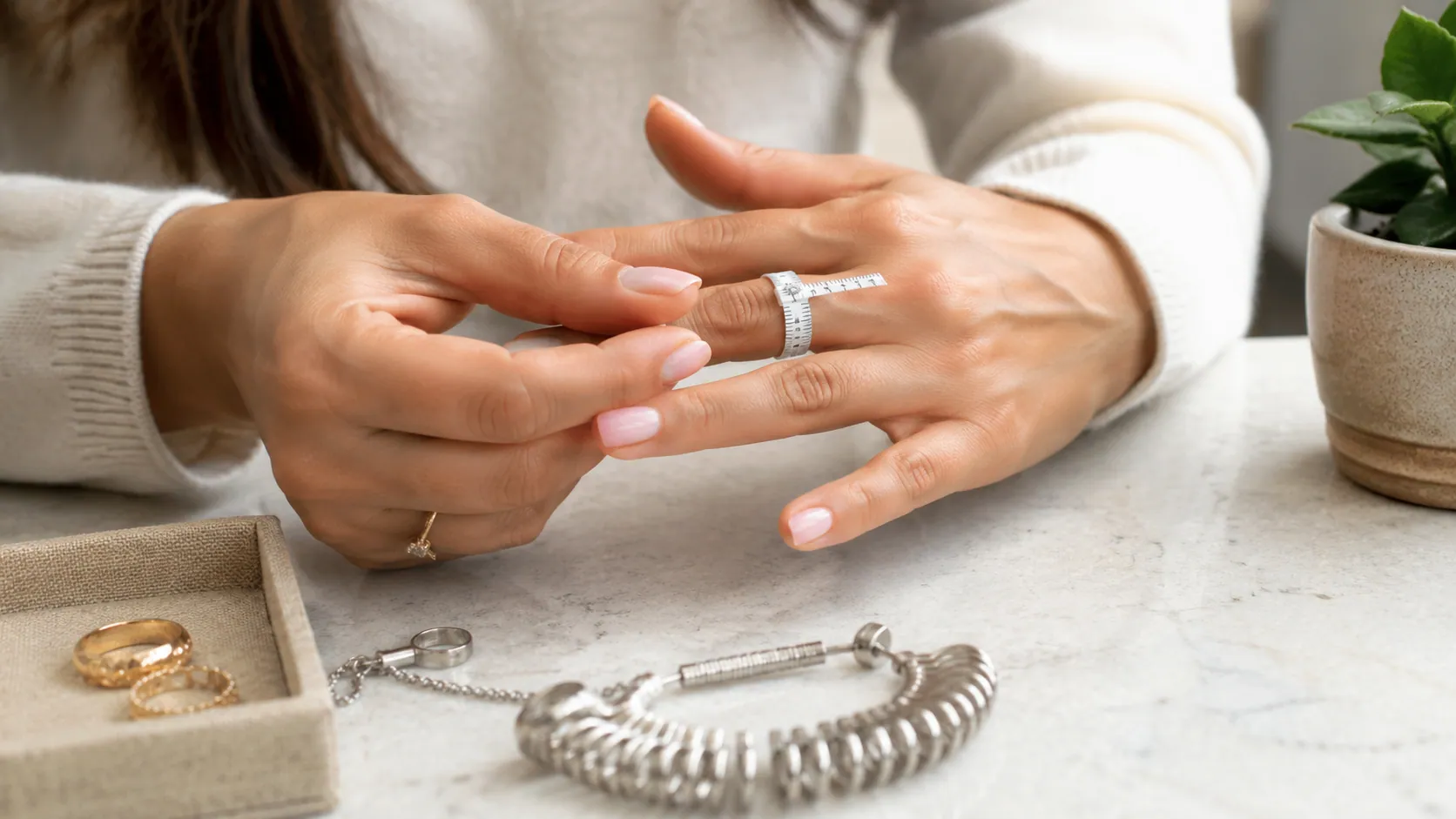
How do you know what ring size is right before buying a ring online, choosing a gift, or helping a child or teen find a comfortable fit? It can feel confusing at first because ring size is not only about a number on a chart. The right size affects comfort, safety, appearance, and long-term wear, especially if the ring will be worn every day.
A properly fitted ring should feel secure but not tight. It should slide over the knuckle with a little resistance, sit comfortably at the base of the finger, and not pinch, spin too much, or feel like it may fall off. Because fingers can change size during the day, it is also important to measure carefully instead of guessing.
This ring fit guide will explain how to find ring size using simple at-home methods, how to measure ring size at home, how to use a ring you already own, and why finger size can change with temperature, swelling, age, or daily activity. It will also cover helpful tips for sizing rings for children and teens, choosing a ring for a surprise gift, and knowing when it is better to ask a professional for ring sizing help.
At-home methods can give you a useful estimate, especially for casual or fashion rings. However, if the ring is expensive, meaningful, custom-made, or intended as an engagement ring or wedding band, visiting a professional jeweler is the safest way to confirm the correct ring size before you buy.
How Do You Know What Ring Size You Are?
You can know your ring size by measuring your finger, checking a ring that already fits, or getting sized by a jeweler. If you are asking, “what ring size am I?”, the most reliable answer comes from using more than one method and comparing the results before you order.
The easiest way to find your ring size at home is to wrap a thin strip of paper, string, or a flexible measuring tape around the finger where the ring will sit. Mark the point where it meets, measure the length in millimeters, and compare it with a trusted ring size chart. This gives you a basic ring size measurement based on your finger’s circumference.
Another simple method is to use a ring you already own. Choose one that fits the same finger on the same hand, then measure the inside diameter of the ring. You can compare that measurement with a ring size chart to estimate your size. A printable ring size chart can also help, but it must be printed at the correct scale or the result may be wrong.
For a more accurate option, you can try a plastic ring sizer or visit a local jeweler. A jeweler can measure your finger with professional sizing tools and help you understand how the ring should fit based on your knuckle, finger shape, and the style of ring you want.
A properly fitted ring should slide over the knuckle with slight resistance and sit comfortably at the base of the finger. It should not feel painfully tight, leave deep marks, spin constantly, or slip off easily. The goal is a snug ring fit that feels secure without cutting into the skin.
Ring size can vary by finger, hand, temperature, time of day, and ring style. For example, fingers may be slightly larger in warm weather and smaller when cold. Your dominant hand may also be a little bigger than your other hand. Wide bands can feel tighter than thin bands, even when they are technically the same size.
For the most accurate ring size, measure more than once before ordering. Try measuring at different times of the day, avoid measuring when your hands are very cold or swollen, and compare your results before choosing a final size.
Measure Your Ring Size at Home Using Paper, String, or Measuring Tape
One of the easiest ways to measure ring size at home is to use a thin strip of non-stretch paper, a piece of string, dental floss, or a flexible measuring tape. This method helps you measure the finger circumference, which you can then compare with a ring size chart or ring size conversion chart.
Start by choosing the exact finger where the ring will be worn. This matters because the same finger on your left and right hand may not be the same size. For example, a ring that fits your right ring finger may feel too loose or too tight on your left ring finger. Always measure the exact finger and exact hand before choosing a size.
Wrap the paper, string, or measuring tape around the base of your finger where the ring will normally sit. Keep it snug, but not tight. It should touch the skin comfortably without pressing in or leaving a mark. If you pull it too tightly, you may end up with a ring that feels uncomfortable or is hard to remove.
Once the paper or string is wrapped around your finger, mark the point where the ends meet. Then lay it flat and measure the length in millimeters with a ruler. This number shows the circumference of your finger. You can compare that measurement with a trusted ring size conversion chart to find the closest ring size.
If you want to measure ring size with string, be careful because some string, floss, or thread can stretch while you are pulling it around your finger. That can make the measurement slightly inaccurate. A strip of paper or a flexible measuring tape is often more reliable for home ring sizing because it holds its shape better.
For the best result, measure your finger two or three times instead of trusting one quick measurement. If the numbers are close, use the most consistent result. If the measurements are very different, try again when your hands are at a normal temperature and your fingers are not swollen. This simple extra step can help you get a more accurate ring size in mm before ordering.
Use a Ring You Already Own to Find the Right Size
Another simple way to find the right ring size is to use a ring you already own. This method works well if you have a ring that fits comfortably on the same finger and the same hand where the new ring will be worn. It is especially helpful for online ring shopping, surprise gifts, or replacing a ring in a similar style.
To do this, choose a ring that fits well—not too tight, not too loose, and not constantly spinning around your finger. Place it on a flat surface and measure the inside diameter of the ring in millimeters. The inside diameter is the distance across the open circle of the ring from one inner edge to the other inner edge.
When measuring, make sure you are measuring the inner edge, not the outside edge. The outside edge includes the thickness of the metal, which can make the ring seem larger than it really is. Once you have the ring inside diameter, compare that number with a trusted ring size chart to find the closest size.
This method is useful when you want to measure an existing ring instead of measuring your finger directly. However, the ring you use should be in good condition. Avoid using a ring that is bent, warped, very old, too loose, or worn on a different finger. A damaged or poorly fitting ring can give you the wrong ring size by diameter.
It is also important not to assume both hands are exactly the same. A ring that fits your right ring finger may not fit your left ring finger perfectly, especially if one hand is dominant or slightly larger. So, if you use a ring to find size, always choose one that fits the exact finger you are sizing for.
For surprise gifts, this method can be one of the easiest options. If you can safely borrow a ring the person already wears on the correct finger, a jeweler can measure it for you, or you can compare the ring size from another ring using a printable or online chart. For expensive rings, engagement rings, or custom designs, it is still best to confirm the size with a professional jeweler whenever possible.
Check the Fit: What a Correct Ring Size Should Feel Like
Knowing the number is helpful, but it is just as important to understand how a ring should fit in real life. A correct ring size should feel comfortable, secure, and easy to wear during normal daily activities.
A good ring should slide over the knuckle with mild resistance. You should feel a little pressure when putting it on or taking it off, but it should not hurt or get stuck. Once the ring is past the knuckle, it should sit comfortably at the base of the finger without squeezing the skin.
If the ring is too tight, it may pinch, leave deep marks, make the finger feel swollen, or become difficult to remove. A tight ring can also feel worse in warm weather or after exercise, when fingers naturally swell a little. If you notice discomfort, strong pressure, or trouble taking the ring off, the size may be too small.
If the ring is too loose, it may spin constantly, slide up and down, or feel like it could fall off. A loose ring can be annoying during daily tasks and may be easier to lose, especially when washing hands, using lotion, or being outside in cold weather. The goal is not a loose fit, but a snug ring size that feels stable without being uncomfortable.
A comfortably snug ring should stay in place most of the time. It may move slightly as your hand moves, but it should not twist around constantly or leave strong marks. You should be able to remove it with a gentle pull and a small turn over the knuckle.
Ring style also affects fit. A wide band ring size can feel tighter than a thin band because more metal touches the finger. If you are buying a wide band, you may need to size up slightly for comfort, especially if you are between two sizes. Thin rings usually feel lighter and may fit closer to your measured size.
People with larger knuckles may need extra care when choosing a size. The ring has to be large enough to pass over the knuckle but not so large that it spins loosely at the base of the finger. In this case, the best knuckle ring fit is a balance between getting the ring on safely and keeping it comfortable once it is in place. For valuable rings or difficult finger shapes, a jeweler can help find the most practical fit.
Why Ring Size Can Change During the Day?
Ring size is not always fixed. Your fingers can look and feel slightly different throughout the day, which is one reason a ring may feel perfect in the morning but tighter by evening. If you have ever noticed a fingers swollen ring feeling after a long day, warm weather, or exercise, that is usually because your finger size has temporarily changed.
Several everyday factors can affect finger swelling ring size, including heat, cold, salt intake, exercise, hydration, pregnancy, weight changes, hormonal changes, and medical swelling. Warm weather can make fingers swell slightly, while cold weather can make them shrink a little. This is why a ring may feel loose in winter but tighter during summer.
Salt intake can also make a difference. After eating a salty meal, the body may hold extra fluid, and some people notice puffiness in their hands or fingers. Exercise can have a similar effect because blood flow increases and hands may swell temporarily. Hydration levels, hormones, pregnancy, and certain health conditions can also affect how your ring fits from one day to another.
The best time to measure ring size is when your hands are at a normal, comfortable temperature. Avoid measuring when your fingers are very cold, very hot, or visibly swollen. It is also better not to measure right after exercise, after a very salty meal, or first thing in the morning if your hands tend to feel puffy.
If you often deal with swelling, measure your finger at different times of the day before choosing a final size. This gives you a more realistic idea of how your ring will feel during normal wear. Understanding why ring size changes can help you avoid choosing a size that only fits well for one part of the day but feels uncomfortable later.
How Parents Can Find Ring Sizes for Kids, Teens, or Family Gifts
Finding the right ring size for a child or teen can be a little different from sizing an adult ring. Children and teens are still growing, so their fingers can change size more quickly. That means a ring that fits well today may feel tight or uncomfortable later, especially if it is worn often.
If you are a parent buying a ring for a child, teen, birthday gift, graduation gift, keepsake, or family ring, try not to guess the size. Guessing can lead to a ring that is too loose and easy to lose, or too tight and uncomfortable. A simple measurement at home can help, but for valuable or meaningful jewelry, professional family ring sizing is the safer choice.
For younger children, an adjustable ring is often more practical than a fixed-size ring. It gives a little flexibility as the child grows and can reduce the chance of the ring becoming too tight too quickly. Still, adjustable rings should be smooth, comfortable, and checked regularly to make sure they are not pinching the skin.
For teens, measure the exact finger where the ring will be worn. A teen ring size can vary from one hand to the other, just like adult sizing. If the ring is for regular wear, it is also smart to think about future growth. A ring should feel secure, but it should not be so tight that there is no room for natural changes in finger size.
Parents should be careful with rings that feel too snug on children. Kids may not always notice early signs of swelling, pressure, or discomfort. A tight ring can leave marks, become hard to remove, or cause stress if the finger swells during the day. For children, comfort and safety matter more than getting a “perfect” fashion fit.
Baby rings and baby keepsake rings should be treated with extra care. They are often meant for photos, memory boxes, or short supervised moments rather than daily wear. Babies and very young children should not wear rings unsupervised because small jewelry can create safety risks if it slips off or is placed in the mouth.
If you are a parent buying ring size for a valuable gift, a family heirloom, or a ring your child or teen will wear regularly, ask a jeweler for safe sizing help. A professional can measure the finger properly, explain whether the ring can be resized later, and help you choose a fit that is comfortable, secure, and age-appropriate.
How to Find Someone’s Ring Size for a Surprise Gift
Trying to find someone’s ring size for a surprise gift can feel tricky, especially if you do not want to ask directly. Whether you are buying a birthday ring, promise ring, anniversary gift, or engagement ring, the goal is to get as close as possible without guessing blindly.
One of the best ways to find ring size secretly is to borrow a ring they already wear on the correct finger. This only works if the ring fits the same finger you are buying for. For example, if you need an engagement ring size, try to use a ring they wear on the ring finger of the correct hand. A ring worn on the middle finger or opposite hand may not give the right result.
You can take the borrowed ring to a jeweler and have it measured professionally. If you cannot take the ring with you, place it on a piece of paper and carefully trace the inside circle of the ring. The inner edge is what matters because that shows the space where the finger sits. A jeweler may be able to use the tracing as a helpful estimate.
Another option is to ask someone close to them, such as a parent, sibling, best friend, or trusted family member. They may already know the person’s partner ring size from a previous jewelry purchase, or they may be able to ask in a casual way without ruining the surprise. You can also check whether the person has bought rings before from a jewelry store, as some stores keep sizing details in customer records.
Avoid guessing a gift ring size based on height, weight, shoe size, or general body size. These details do not reliably show finger size. Two people with similar body types can have very different finger shapes, knuckle sizes, and ring sizes.
If you are buying a surprise engagement ring, choose a jeweler with a clear resizing, return, or exchange policy. Even careful measuring can be slightly off, especially when the ring is a surprise. A good resizing policy gives you more peace of mind if the ring needs a small adjustment after the proposal.
Also remember that some rings are harder to resize than others. Eternity bands, rings with stones all around the band, detailed vintage designs, engraved bands, and custom settings may have limited resizing options. If you are unsure about the size, ask the jeweler before buying. For a surprise ring, it is better to choose a design that allows some flexibility than to risk a beautiful ring that cannot be adjusted later.
Ring Size Charts, International Sizes, and Online Tools Explained
A ring size chart is useful because it connects your finger measurement to a standard ring size. However, ring sizing is not the same everywhere. If you are buying from an online store, international brand, or marketplace, always check which sizing system the seller uses before choosing your size.
In the U.S. and Canada, ring sizes are usually shown as numbers, such as size 5, 6, 7, 8, or half sizes like 6.5. In the U.K. and Australia, ring sizes are often shown as letters, such as L, M, N, or O. In many parts of Europe, ring sizes are commonly based on the inner circumference of the ring in millimeters. This is why a US ring size, UK ring size, and EU ring size may look completely different even when they refer to a similar fit.
Before ordering, compare your measurement with the chart from the same brand or retailer. This matters because some brands may use slightly different conversions, especially for fashion rings, wide bands, handmade rings, or international sizing. A general ring size conversion chart can help, but the seller’s own chart is usually the better reference when buying from that specific store.
Online tools can also be helpful. An online ring sizer or phone-based sizing tool may let you place an existing ring on the screen to estimate the size. These tools can give a quick idea, but they depend on accurate screen calibration. If the phone or computer display is not set correctly, the result may be wrong.
A printable ring sizer can also work well, but only if it is printed at 100% scale. Do not use “fit to page,” “shrink to fit,” or automatic scaling when printing. After printing, check the guide’s test ruler or scale box with a real ruler to make sure the page printed correctly. Even a small printing error can change the final size.
For the best result, use charts and tools as a guide, not the only answer. Measure your finger carefully, compare it with the retailer’s size chart, and check the fit style of the ring you want. If the ring is expensive, custom-made, or difficult to resize, it is still safest to confirm the size with a professional jeweler before ordering.
Smart Rings, Wedding Bands, and Fashion Rings May Fit Differently
Not every ring fits the same way, even if the size number looks correct. A smart ring size, wedding band size, and everyday fashion ring fit can feel different because each ring has its own width, shape, material, and purpose.
Smart rings usually need a more precise fit than regular jewelry. Because many smart rings track things like activity, sleep, heart rate, or body signals, they often need steady contact with the skin. If the ring is too loose, it may move too much and affect comfort or tracking. If it is too tight, it can feel uncomfortable during swelling or overnight wear. This is why many smart ring brands provide sizing kits before purchase. For example, people looking into Oura ring sizing are often encouraged to test a sizing kit because the fit affects both comfort and function.
Wedding bands can also feel different from regular rings. A thin wedding band may feel light and easy to wear, while a wide band may feel tighter because it covers more of the finger. The metal, edge shape, and inside curve can also change the way it feels. A band with a rounded inner surface, often called a comfort fit ring, may slide on more smoothly than a flat inner band in the same size.
Fashion rings can vary even more because sizing may depend on the brand, design, and material. Some fashion rings are made with thicker bands, large decorative tops, or unusual shapes that affect how they sit on the finger. A ring that looks beautiful may still feel uncomfortable if the band is too wide, too heavy, or poorly balanced.
Stacking ring size can be slightly different too. When several rings are worn together on the same finger, they can feel tighter as a group than one thin ring worn alone. If you plan to wear multiple rings at the same time, it may help to test the full stack together instead of sizing each ring separately.
The main point is simple: ring size is not only about the number. The same size can feel different depending on whether the ring is a smart ring, wedding band, fashion ring, comfort-fit band, or stacking ring. If you are buying a ring for daily wear, check the style carefully and choose a fit that stays comfortable during real life, not just during a quick try-on.
Common Ring Sizing Mistakes to Avoid
Even a small measuring mistake can lead to the wrong ring size, especially when ordering online. The most common problem is measuring too quickly and trusting one result. Finger size can change slightly during the day, so measuring only once may give you an inaccurate ring measurement.
One mistake is pulling the string, floss, or paper strip too tight around the finger. If you squeeze the finger while measuring, the final size may be smaller than it should be. That can lead to a ring size too small, which may pinch, leave marks, or become difficult to remove. The measuring material should sit snugly around the finger, but it should not press into the skin.
Using stretchy material is another common issue. Some string, thread, or elastic-like material can stretch while you wrap it around your finger. This can make the measurement look smaller than your real finger circumference. To avoid ring sizing errors, use non-stretch paper or a flexible measuring tape when possible.
Many people also measure the wrong finger. A ring meant for the left ring finger should be measured on the left ring finger, not the right hand or another finger. Both hands are not always the same size, and the dominant hand may be slightly larger. Assuming both hands match can easily lead to a ring that feels too tight or too loose.
Another mistake is measuring when your fingers are very cold, hot, or swollen. Cold fingers may measure smaller, while swollen fingers may measure larger. If you measure at the wrong time, you may end up with a ring size too big or too small for normal daily wear. It is better to measure when your hands are at a comfortable, normal temperature.
Ignoring knuckle size can also cause problems. Some people have larger knuckles and narrower finger bases. In that case, the ring needs to pass over the knuckle without being so loose that it spins constantly once it is on. A good fit should balance both areas.
Printable charts can be helpful, but only if they are clear and printed correctly. A blurry chart, a phone screenshot, or a printable guide that was not printed at 100% scale can give the wrong result. Always check the test ruler on the chart before trusting it.
Finally, do not guess based on average ring size. Average sizes may be useful for general reference, but they are not reliable for choosing a personal fit. Finger shape, band width, ring style, and daily swelling all matter. Wide bands often fit tighter than thin bands, so forgetting this detail can lead to discomfort even when the number seems correct.
When You Should Visit a Jeweler for Ring Sizing
At-home methods are helpful, but there are times when professional ring sizing is the better choice. If the ring is expensive, meaningful, custom-made, or intended for daily wear, a jeweler can give you a more accurate size and help you avoid costly mistakes.
You should visit a jeweler if the ring is an engagement ring or wedding band. These rings are often worn every day, so the fit needs to be comfortable, secure, and practical for long-term use. A professional can help with engagement ring sizing or a wedding ring fitting by checking both the finger size and the way the ring style sits on the hand.
A jeweler is also helpful if the wearer has large knuckles or a finger shape that is difficult to size. Some people need a ring that can pass over the knuckle but still sit securely at the base of the finger. In this case, a jeweler can test different sizes and suggest the most comfortable option.
It is especially important to ask a jeweler for help if the ring has diamonds, gemstones, or detailed designs around the band. Rings with stones all the way around, vintage rings, custom rings, engraved bands, or delicate settings may be harder to resize. Ring resizing is possible for many rings, but not every style can be adjusted easily without affecting the design.
Professional jewelers use proper sizing tools, such as sizing rings and mandrels, to measure both the finger and the ring. These tools give a more reliable result than guessing from a chart or using a quick at-home method. A jeweler can also explain whether a half size, quarter size, wider band, or comfort-fit style may work better.
If you are unsure between two sizes, it is smart to get a jeweler ring size before ordering. This is especially true when buying online, where you cannot try on the ring first. Before you purchase, also check the store’s ring exchange policy, resizing rules, return window, and any fees. A clear policy gives you more protection if the ring does not fit perfectly when it arrives.
Conclusion: How Do You Know What Ring Size Is Right?
How do you know what ring size is right? It comes down to measuring carefully, checking how the ring actually feels, and considering real-life factors like finger swelling, band width, knuckle size, and daily comfort. A number on a chart is helpful, but the correct ring size is the one that fits your finger safely and comfortably in normal everyday conditions.
The best place to start is by measuring your finger with paper, string, or a flexible measuring tape. You can also measure an existing ring that already fits well and compare the inside diameter with a ring size chart. If you are shopping online, always check the retailer’s own chart because sizing systems and conversions can vary.
Fit matters just as much as measurement. A ring should slide over the knuckle with slight resistance, sit comfortably at the base of the finger, and stay secure without pinching or slipping. The best ring fit should not leave deep marks, feel painful, spin constantly, or feel like it may fall off during normal activities.
It is also important to think about the ring style. Wide bands often feel tighter than thin bands, and people with larger knuckles may need a size that balances easy removal with a secure fit. Finger size can also change because of heat, cold, exercise, salt intake, pregnancy, or swelling, so measuring more than once can help you choose a more comfortable ring size.
If the ring is expensive, meaningful, custom-made, or difficult to resize, visiting a professional jeweler is the safest choice. A jeweler can confirm your size with proper tools and explain whether the ring style may need special sizing. This is especially helpful for engagement rings, wedding bands, smart rings, vintage rings, or designs with stones around the band.
For parents buying rings for kids or teens, comfort, growth, and safety should come before style. Children’s fingers can change quickly, and rings should never feel tight or be worn unsupervised by very young children. When in doubt, choose a safe, flexible option or ask a jeweler for guidance.
This ring sizing guide gives you several ways to measure and check your size, but the final goal is simple: the best ring size is the one that feels secure, comfortable, and wearable in everyday life.
FAQs About How Do You Know What Ring Size You Need
Can I measure my ring size at home accurately?
Yes, you can get a useful estimate at home if you know how to measure finger for ring sizing correctly. A strip of non-stretch paper, a flexible measuring tape, or a ring that already fits can help you find a close measurement. Just make sure you measure in millimeters, use a reliable ring size chart, and check the result more than once.
For casual rings, this may be enough. For important purchases, such as engagement rings, wedding bands, custom rings, or expensive jewelry, a jeweler can give a more accurate ring size using professional tools.
Should a ring feel tight or loose?
A ring should feel snug, not tight. It should slide over the knuckle with slight resistance and sit securely at the base of the finger without pinching. If the ring leaves deep marks, feels painful, or is hard to remove, it may be too small.
A ring should not be too loose either. If it spins constantly, slides off easily, or feels like it may fall off when your hands are cold or wet, it may be too large. The best fit is comfortable, secure, and easy to wear during normal daily activities.
Is it better to size up or down if I am between sizes?
If you are between ring sizes, the better choice depends on the ring style, finger shape, and how the ring will be worn. Wider bands often feel tighter because they cover more of the finger, so sizing up slightly may be more comfortable. Thin bands usually feel lighter and may fit closer to your measured size.
If your knuckles are larger than the base of your finger, you may need a size that can pass over the knuckle but still stay secure once it is on. When you are unsure, a jeweler can help you choose the safest fit.
Are ring sizes the same on both hands?
Not always. Ring sizes can vary between your left and right hand. In many people, the dominant hand is slightly larger because it is used more often. That means a ring that fits one hand may not fit the same finger on the other hand.
For the best result, measure the exact finger and exact hand where the ring will be worn. This is one of the simplest ways to avoid common ring size questions and sizing mistakes.
What is the most accurate way to know ring size?
The best way to know ring size is to visit a professional jeweler and have your finger measured with proper sizing tools. Jewelers use sizing rings, mandrels, and fit experience to help you find the most accurate and comfortable size.
At-home methods are helpful for getting started, but professional sizing is the safest option when the ring is valuable, meaningful, difficult to resize, or meant for everyday wear.
Disclaimer
This article is for general informational purposes only. Ring sizing results, comfort preferences, finger shape, and fit needs can vary from person to person. For valuable, custom, or meaningful rings, consider getting measured by a professional jeweler before buying.