
 By Admin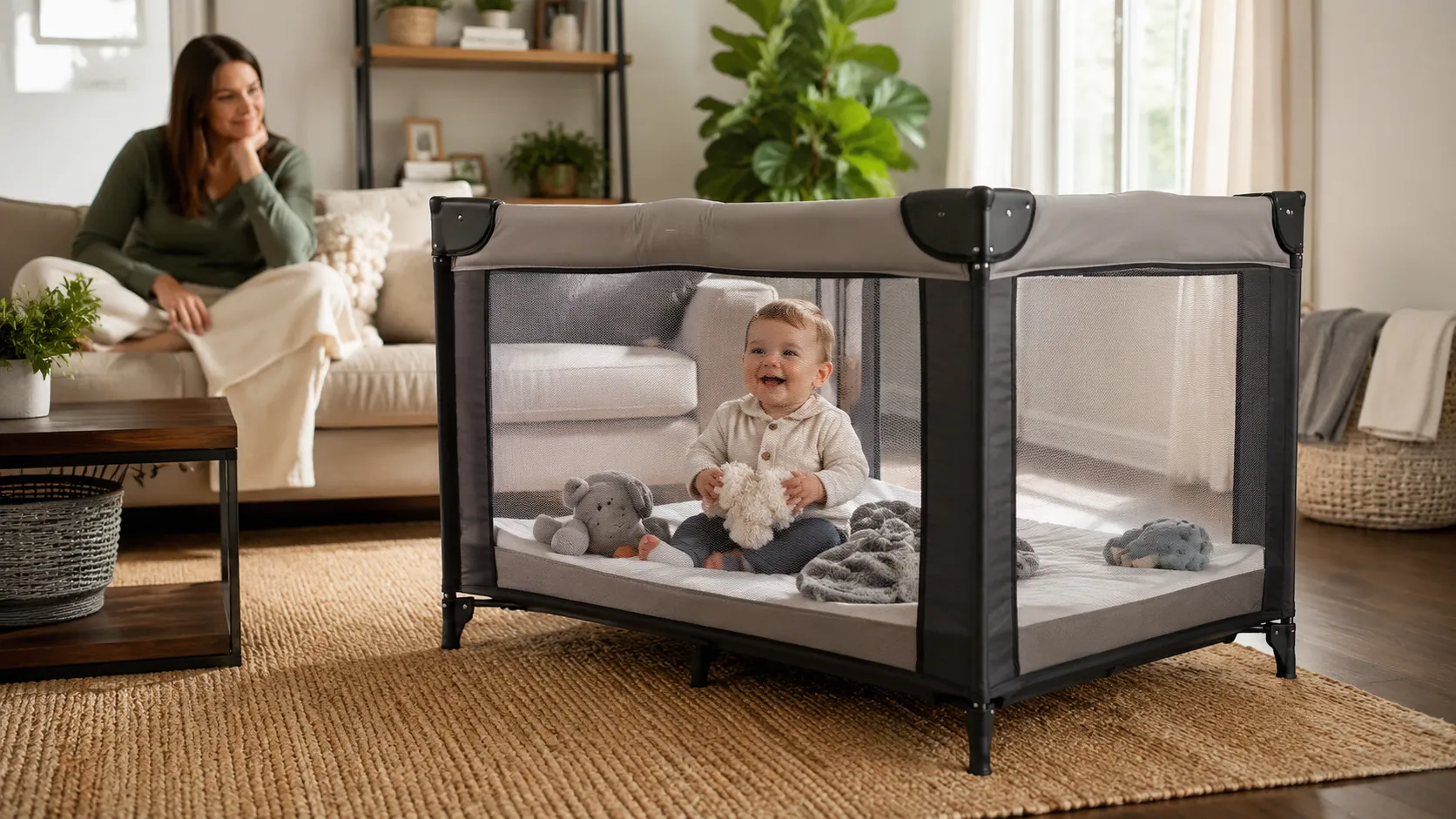
Introduction
Foundation by the yard can be a confusing search term for new parents because many people may actually be looking for a Foundations play yard, baby travel yard, portable play yard, or pack and play. These products are designed to give babies a safe, practical space for rest, play, and travel when used correctly.
For new parents, choosing the right baby play yard is not only about size, price, or how easy it is to fold. It is also about understanding safe sleep use, proper setup, cleaning, travel convenience, age limits, and the common mistakes that can affect safety. A good travel yard for baby should feel simple to use, easy to maintain, and reliable in everyday parenting situations.
This new parent guide will explain what to look for in a portable play yard, how to use it safely, when a baby can sleep in it, how to keep it clean, what to check before travel, and which warning signs parents should never ignore. Once you understand which safety features truly matter, choosing a play yard becomes much easier and less stressful.
What Does “Foundation by the Yard” Mean for Parents?
When parents search “what is foundation by the yard,” the phrase can feel a little confusing because it may point to two different things. Foundation by the Yard can refer to quilting or fabric-related products, especially foundation piecing materials sold by the yard. But for parents, the search often means something different. Many parents are actually looking for a Foundations baby play yard, Foundations travel yard, baby travel crib, or portable crib.
In simple words, a Foundations play yard is a safe, foldable baby space that can be used for rest, play, or travel when it is used correctly. Parents may also call it a playpen, foldable play yard, portable crib, or mesh play yard. These names are often used in similar ways, although each product may have its own features, size limits, and safety instructions.
A baby play yard is usually made as a framed enclosure with a floor and soft mesh or fabric sides. The mesh sides help parents see the baby more easily while also allowing airflow. Many play yards are designed to fold down, making them helpful for travel, small homes, daycare settings, hotel stays, or visits to grandparents.
The CPSC describes play yards as framed enclosures with a floor and mesh or fabric sides, intended for a child to sleep or play in, and many are designed to fold for travel or storage. This is why parents should treat a play yard as real baby equipment, not just a casual play space. It should be checked carefully before use, especially if it is borrowed, secondhand, or used outside the home.
For better search results, parents should use more specific terms like Foundations baby play yard, Foundations travel yard, Foundations Sleep ’N Store, baby travel crib, or portable crib for baby. These searches are clearer and more likely to show the exact type of product parents need.
Why New Parents Use a Foundations Play Yard
New parents use a Foundations play yard because it gives them a flexible baby space that can fit into everyday family life. During the day, a play yard can provide a safe place for short, supervised moments while parents fold laundry, prepare a bottle, answer the door, or take a quick break nearby. It is not a replacement for supervision, but it can make daily routines feel more manageable.
A baby sleep space is another reason parents consider a play yard. When used according to the manufacturer’s instructions and safe sleep guidelines, some play yards can work as a portable sleep option. This can be helpful during travel, family visits, hotel stays, or when parents need a familiar place for the baby outside the main bedroom.
Many parents also like a travel crib for parents because it creates consistency. Babies often sleep better when their environment feels familiar. Taking the same newborn travel yard to a grandparent’s house or on a short trip may help reduce stress because the baby already knows the space.
A compact baby gear option is also useful for small homes, apartments, shared rooms, or homes where a full-size crib is not practical in every area. Some parents keep the crib in the bedroom and use a play yard downstairs during the day. This kind of setup can be helpful because the baby has a nearby baby play space, while parents do not have to carry the baby back and forth for every short rest or supervised play moment.
Foundations travel yards are often promoted as products that provide a space for sleep or play, especially in childcare, hospitality, and family-travel settings. This makes them useful not only for parents at home but also for grandparents, caregivers, hotels, and daycare-style environments.
Still, parents should remember one important rule: a play yard is helpful, but it should not replace active supervision. It gives babies a defined space, but parents should still check the baby often, keep the area clear of hazards, follow age and weight limits, and use the play yard only as the manual recommends.
Safety First: What Parents Must Check Before Using Any Play Yard
When choosing any baby play yard, safety should come before price, color, size, design, or brand name. A play yard may look simple, but it is still a baby sleep and play product. That means parents should check it carefully before every use, especially if it is borrowed, secondhand, used during travel, or stored away for a long time.
The first thing to check is whether the product meets current CPSC play yard standards. The CPSC describes a play yard as a framed enclosure with a floor and mesh or fabric sides, mainly intended to provide a place for a child to sleep or play, and many models can fold for storage or travel. CPSC guidance also notes that play yards are generally intended for children under 35 inches tall who cannot climb out.
Parents should also check the sleep surface. A safe play yard should have a firm flat mattress or pad that fits properly inside the frame. Use only a fitted sheet made for that exact play yard size. Loose sheets, thick pads, soft toppers, or extra blankets can shift and create unsafe gaps.
For baby safe sleep, the sleep space should stay clear. Do not place pillows, blankets, toys, bumpers, stuffed animals, or other soft bedding inside the play yard while the baby sleeps. The American Academy of Pediatrics advises that babies should sleep on their backs in their own sleep space, using a crib, bassinet, portable crib, or play yard with a firm, flat mattress and fitted sheet.
Before placing your baby inside, inspect the frame. Look for broken rails, loose mesh, missing screws, torn fabric, weak corners, or an unstable base. If the play yard shakes, folds unevenly, or does not lock firmly, do not use it until the problem is fixed according to the manufacturer’s instructions.
A very important expert-backed warning is this: never add an extra mattress unless the manufacturer specifically says it is safe for that exact model. Parents sometimes add thicker padding because they think it will make the play yard more comfortable, but extra mattresses can create gaps between the mattress and side walls. Those gaps may increase suffocation risk or entrapment danger.
If you are using a secondhand play yard, check the play yard recall status before use. Recalls are not rare in baby products. CPSC recall examples have involved unsafe play yards where babies could become trapped under the mattress or between the mattress and the side wall, creating serious suffocation and entrapment hazards.
A simple safety routine can help: check the frame, check the mattress, check the sheet, and check the space around the play yard. If any part feels loose, damaged, or unclear, stop and read the manual before using it again.
Best Features to Look for in a Foundations Baby Play Yard
The best baby play yard features are the ones that make daily use safer, easier, and cleaner. A good Foundations baby play yard should not only look nice; it should support real parent needs like safe setup, easy cleaning, quick folding, and comfortable travel.
One of the most useful features is breathable mesh play yard sides. Mesh allows better visibility, so parents can see the baby from different angles. It also makes the play yard feel more open and less closed in. For many parents, 360-degree visibility is helpful during supervised play because they can quickly check the baby without standing directly over the play yard.
A firm included mattress or pad is also important. The mattress should sit flat, fit tightly, and match the product design. Parents should avoid replacing it with a random mattress unless the manufacturer clearly allows it.
An easy-fold frame is another practical feature, especially for travel or small spaces. A foldable travel yard should open and close without too much effort. If it is hard to fold, parents may avoid using it, or they may set it up incorrectly when tired or rushed.
A carry bag is useful for family visits, hotels, daycare drop-offs, or storing the play yard between uses. Some parents do not think about storage until later, but a good bag keeps the product cleaner and easier to move.
A washable play yard cover or washable sheet can make a big difference. Babies spit up, diapers leak, snacks crumble, and travel surfaces are not always clean. For that reason, many experienced parents choose “easy to clean” over “cute design.” A beautiful play yard becomes frustrating if the fabric is hard to wipe, slow to dry, or difficult to remove.
If mobility matters, a play yard with wheels can be helpful, but the wheels should lock securely. Locking wheels are useful when parents need to move the play yard from one room to another, but the product should not roll while the baby is inside.
Some models also include storage pockets for diapers, wipes, pacifiers, or a spare fitted sheet. These pockets are small, but they can help during nighttime changes or travel. Just make sure nothing hangs inside the baby’s sleep space.
An optional bassinet can be helpful for younger infants, but only when used within the correct weight, height, and developmental limits. Parents should stop using bassinet mode as soon as the manual says to stop, especially when the baby grows, pushes up, rolls, or becomes more active.
Some Foundations models highlight features such as mesh sides, foldability, washable covers, storage bags, locking wheels, and optional bassinet features. For example, SnugFresh Elite listings describe a washable microfiber cover, storage pockets, locking wheels, a storage bag, and a quick-fold design.
Commercial-grade models may be useful for daycare, grandparents’ homes, hotels, or families who travel often. These products are usually designed for repeated use, but parents should still check the manual, safety limits, cleaning instructions, and replacement-part availability before buying.
Foundations Play Yard Models Parents Commonly Compare
Parents often compare different Foundations travel yard models because each one serves a slightly different need. The goal is not to buy the most expensive option or the one with the longest feature list. The goal is to choose the best Foundations play yard for your baby’s age, your home, your travel routine, and your ability to use it safely every time.
The Foundations Sleep N Store Travel Yard is often considered by parents who want something compact, foldable, and storage-friendly. This type of play yard can be helpful for families with limited space, occasional travel needs, or grandparents who want a product that can be folded away when not in use.
The Sleep ’N Store with Bassinet may appeal to parents of younger infants because the bassinet feature can make it easier to place the baby down without bending as low. However, a baby play yard with bassinet should always be used according to the exact weight and developmental limits in the manual. Bassinet attachments are not meant for every stage of baby growth.
The Foundations SnugFresh Elite Play Yard is often compared by parents who care about hygiene and frequent cleaning. Features like a washable cover, wheels, storage pockets, and quick folding can be useful in homes, childcare spaces, and travel settings. This can be a strong option for families who want a practical product that is easier to clean after spills, diaper leaks, or shared use.
Celebrity or commercial-style travel yards may be useful for hotels, childcare centers, grandparents’ homes, or heavy-use environments. A commercial baby play yard can make sense when the product will be used often by different caregivers or in different rooms. Still, commercial does not automatically mean safer for every family. Parents should compare the actual safety details, instructions, and condition of the product.
Some product and safety descriptions mention use for children up to 35 inches tall, but limits can vary by model and attachment. Bassinet limits may be different from the main play yard limit, so parents should never guess. Read the manual before use and follow the exact height, weight, and development guidance for your model.
When comparing Foundations play yards, do not choose only by price. Compare safety certification, mattress fit, replacement parts, cleaning needs, storage space, folding style, wheel locks, sheet availability, and how the product will work in real daily life. A simple model that you can set up correctly every time is often better than a feature-heavy model that feels confusing, bulky, or hard to clean.
Can a Baby Sleep in a Play Yard?
Yes, a baby can sleep in a play yard, but only when the product meets current safety standards and is used exactly as directed. Play yard safe sleep depends on the setup, the mattress, the sheet, the baby’s age, and whether parents follow the manufacturer’s instructions every time.
For safe sleep for newborn babies, the most important rule is to place the baby on their back for every sleep, including naps and nighttime sleep. The sleep surface should be firm, flat, and clear. The American Academy of Pediatrics advises parents to use a crib, bassinet, portable crib, or play yard with a firm, flat mattress and a fitted sheet, and to keep loose blankets, pillows, stuffed toys, bumpers, and other soft items out of the sleep space.
Parents should use only the original mattress or pad that came with the play yard, or a replacement approved by the manufacturer for that exact model. This matters because a random mattress may look like it fits, but even a small gap around the sides can create a safety risk. CPSC play yard safety tips also advise parents to use only the mattress sold with the play yard and to keep pillows, quilts, comforters, and cushions out of the space.
If the play yard includes a bassinet attachment, parents should be extra careful with limits. Stop using bassinet mode when the baby exceeds the stated weight or height limit, or when the baby starts showing developmental signs mentioned in the manual, such as pushing up, rolling, or becoming too active for that attachment. Bassinet mode is useful only for the stage the product was designed to support.
For baby sleeping in pack and play style products during travel, one simple parent tip is to practice at home first. Let your baby nap once or twice in the play yard before a hotel stay, family visit, or vacation. A familiar travel crib sleep safety routine can make the new environment feel less stressful for both baby and parents.
How to Set Up and Use a Play Yard Correctly
Knowing how to set up play yard equipment correctly is just as important as buying a safe product. Many problems happen not because the play yard is poor quality, but because it is folded, opened, or locked in the wrong order.
Start by placing the play yard on a flat, dry, stable surface. Open the frame fully and make sure the rails are locked before pressing the center floor down. This step matters because some play yards will not lock correctly if the center is pushed down too early. After the frame is open, check each corner and side rail to make sure everything feels firm.
Next, place the manufacturer-approved mattress or pad flat inside the unit. It should not bend, bunch, lift at the corners, or leave gaps along the sides. Attach the fitted sheet properly, making sure it is smooth and tight. Before placing the baby inside, gently test the frame to confirm the play yard is stable.
Common play yard setup errors include pushing the center down before the rails lock, using a mattress that is not flat, adding a sheet that is too loose, forgetting to lock the wheels, or not securing the bassinet attachment correctly. If your model has wheels, always lock them before use. If your model has a bassinet, changing station, or removable attachment, check that every clip, strap, and support is fitted exactly as the manual explains.
For easier pack and play setup, practice folding and unfolding the product before your first trip. Do it once when you are not tired, rushed, or standing in a hotel room with a sleepy baby. This small step can prevent a lot of stress later.
A helpful care note is to keep the manual in the carry bag or take clear photos of the travel yard instructions on your phone. A foldable baby play yard may seem simple after a few uses, but instructions are still useful when another caregiver, grandparent, or babysitter needs to set it up safely.
Cleaning and Hygiene Tips for Everyday Use
Learning how to clean play yard surfaces properly helps keep your baby’s space fresh and safer for everyday use. Play yards collect more mess than many parents expect. Drool, diaper leaks, spit-up, dust, crumbs, hotel floors, daycare use, and outdoor travel can all leave the fabric, rails, mattress pad, and wheels needing regular care.
Start with the sheet. Wash the play yard sheet regularly, especially after sleep, travel, sickness, spit-up, or diaper leaks. If the sheet smells damp or feels loose after washing, replace it with one that fits the model correctly.
Wipe the rails, mesh, and outer fabric with a baby-safe cleaner or mild soap solution, following the manufacturer’s cleaning instructions. Avoid soaking areas that are not designed to be submerged, and never fold the play yard while it is wet. Moisture trapped inside the frame or fabric can lead to odor, mildew, or fabric damage.
If you travel often, clean the wheels after hotel stays, airport trips, grandparents’ homes, or daycare use. Wheels can pick up dust and floor grime, so wiping them before storage helps keep the carry bag cleaner. Once the play yard is fully dry, store it in a dry carry bag away from damp rooms, garages, or direct heat.
Some Foundations SnugFresh products highlight a washable cover designed to be removed and laundered, which can be helpful in home, hospitality, or commercial settings where repeated cleaning matters. Product listings for SnugFresh covers describe them as easy to remove for laundering and designed to help provide a clean play yard surface before use.
For better baby gear hygiene, avoid harsh fragrance-heavy sprays on baby sleep surfaces. Strong scents may irritate some babies, and residue can stay on fabric. Mild cleaning, full drying, and regular sheet changes are usually more practical than overusing scented products.
One uncommon but helpful parent tip is to keep one travel-only sheet and one home-use sheet. This makes packing easier and helps keep your clean travel crib routine organized. A spare fitted sheet in the carry bag can also save the day when a diaper leak happens away from home.
Travel, Hotel, and Grandparent Home Use
A travel play yard can make life easier when families are away from home. Babies and young children often feel more settled when they have a familiar sleep or play space, especially during hotel stays, family visits, day trips, shared rooms, or vacations. Instead of depending completely on whatever baby gear is available at the destination, parents can bring a space they already know how to set up and inspect.
For hotel stays, a portable crib for hotel use can reduce packing stress and help keep the baby’s routine more consistent. Some hotels provide play yards or travel cribs for family guests because they are compact, easy to store, and useful for both sleep and play. Foundations also notes that travel baby play yards can support family travelers by offering a familiar sleeping environment and a practical option for hotels that serve families.
A grandparents play yard can also be helpful if your baby visits often. Many grandparents do not need a full nursery, but a foldable play yard gives them a practical baby space that can be stored between visits. It can also work well in shared rooms, small homes, or family gatherings where parents need a clear, supervised area for the baby.
Before traveling, use a simple baby travel checklist:
- Play yard
- Manual or setup instructions
- Correct fitted sheet
- Carry bag
- Baby monitor
- Sleep sack
- Wipes for quick cleaning
If you plan to use a hotel-provided hotel baby crib or play yard, call ahead and ask what brand and model they provide. Also ask whether it has the original mattress or pad, whether fitted sheets are available, and when the unit was last cleaned. This may feel like a small detail, but it can help you avoid surprises after check-in when your baby is already tired.
Whether you use your own pack and play for travel, borrow one from family, or accept one from a hotel, inspect it before use. Check the frame, rails, mesh, mattress, sheet, and locking parts. If anything looks broken, loose, dirty, damp, or incomplete, do not use it for sleep.
Common Mistakes New Parents Make With Play Yards
Many play yard mistakes happen because parents are trying to make the space softer, cozier, or more convenient. The problem is that baby sleep spaces need to be simple and firm, not padded and decorated. A play yard should be used exactly as the manual explains.
One common mistake is adding a soft mattress topper. Parents may think the original pad looks too firm, but firmness is part of safe design. Extra padding can create gaps along the sides and increase baby sleep hazards, especially if the baby rolls or moves toward the edge. CPSC recall notices for unsafe play yards and related products often mention entrapment under the mattress or between the mattress and side wall as a serious suffocation hazard.
Another mistake is placing blankets, pillows, stuffed toys, or bumpers inside the play yard during sleep. The AAP advises that babies sleep on their backs in their own space, on a firm, flat mattress with a fitted sheet, and without loose bedding or soft items.
Parents should also avoid these common pack and play safety mistakes:
- Not locking the rails properly before use
- Ignoring height and weight limits
- Using damaged secondhand play yards
- Forgetting to check recall status
- Letting older toddlers climb in or out
- Using bassinet mode after the baby has outgrown it
- Folding the play yard away while it is still damp
- Using a loose sheet or wrong-size mattress pad
Secondhand play yard safety needs extra attention. A used play yard may be missing parts, have an old recall, or include a replacement mattress that was not made for that model. Before using one, check the label, manual, frame condition, mattress fit, and recall status.
A strong safety routine is easy to remember: check frame, check mattress, check sheet, check surroundings. This quick habit can help parents catch problems before they become risks.
Expert Buying Checklist Before You Purchase
A good baby play yard buying guide should focus on real use, not just attractive features. The best product is not always the biggest, most expensive, or most feature-heavy one. The best play yard is the one parents can set up safely, clean easily, move when needed, and use consistently without confusion.
Before buying, use this practical play yard checklist:
- Does it meet current safety standards?
- Is it the right size for your home and travel needs?
- Is the mattress firm, flat, and designed for that model?
- Are fitted sheets and replacement parts available?
- Is it easy to fold and unfold alone?
- Can the cover or sheet be washed easily?
- Does it have breathable mesh on all sides?
- Is the bassinet attachment actually needed?
- Is the weight manageable for travel?
- Do reviews mention durability, odor, sagging, loose parts, or setup issues?
For the best travel yard for baby, think about your real routine. If you travel often, weight, carry bag quality, and quick setup matter. If you mostly need a home play space, cleaning, visibility, and stability may matter more. If grandparents will use it, choose a model that is simple to open, lock, and store.
Look closely at safe play yard features such as breathable mesh, a firm included mattress or pad, strong locking rails, clear instructions, and a fitted sheet that stays tight. For sleep, AAP safe sleep guidance supports using a crib, bassinet, portable crib, or play yard with a firm, flat mattress and fitted sheet, while keeping soft items out of the sleep space.
A smart new parent baby gear checklist should help you buy less, but choose better. A simple play yard that is safe, cleanable, and easy to use is often more valuable than a complicated model with features you may never need.
Conclusion: Choosing the Right Foundation by the Yard for Your Baby
Foundation by the yard may be a confusing search term, but for new parents, the real goal is usually finding a safe, practical Foundations play yard or safe baby travel yard that works well for everyday life. Once you understand the difference between the quilting term and the baby gear term, it becomes much easier to search for the right product.
The most important thing is to choose safety before extra features. Follow basic baby sleep safety guidance, use only the original mattress or approved pad, and keep the sleep space clear with a tight fitted sheet. Before each use, check the setup, cleaning condition, recall status, age limits, and any signs of damage.
A good portable play yard should fit your real routine, whether you need it for home, travel, grandparents’ visits, hotel stays, or shared rooms. The best play yard is not always the fanciest one. It is the one that gives your baby a safe space and gives you a little more confidence during everyday parenting.
Foundation by the Yard FAQs for New Parents
Is foundation by the yard the same as Foundations play yard?
No. Foundation by the Yard often refers to quilting or fabric-related products, while a Foundations play yard refers to baby play yards, travel cribs, and portable sleep or play spaces. Parents searching for new parent baby gear usually mean the second one, especially when they are comparing a portable play yard, travel crib, or pack and play for daily use.
Is a play yard safe for newborn sleep?
Yes, a newborn sleep play yard can be safe if it meets current safety standards and is used correctly. The baby should sleep on their back, on a firm and flat surface, with only a tight fitted sheet. There should be no pillows, blankets, stuffed toys, bumpers, or soft bedding inside the play yard.
Can I add a thicker mattress to make the play yard more comfortable?
Generally, no. Adding a thicker mattress may seem helpful, but it can create unsafe gaps between the mattress and the side walls. These gaps may increase the risk of suffocation or entrapment. For better baby sleep safety, use only the original mattress or pad that came with the unit, or a replacement approved by the manufacturer for that exact model.
When should I stop using a play yard?
Stop using a play yard when your child reaches the product’s height or weight limit, can climb out, or the product shows damage. Many play yard standards reference use for children under 35 inches tall, but parents should always follow the specific model manual. If your baby is using bassinet mode, stop using that attachment when your baby reaches its stated limit or shows developmental signs listed in the instructions.
Is a used play yard okay?
A used play yard may be okay only if it has all parts, the original instructions, no damage, no recalled status, and a safe original mattress or approved pad. Used play yard safety needs extra care because older products may have missing pieces, loose mesh, broken rails, or replacement parts that do not fit correctly. Before using any secondhand play yard, check the label, manual, frame, mattress fit, and recall status.
Disclaimer
This article is for general informational purposes only and is meant to help parents understand play yard safety, features, and everyday use. Individual needs, product details, safety requirements, and family situations may vary, so always follow the manufacturer’s instructions and consult trusted child safety guidance when needed.