
 By Admin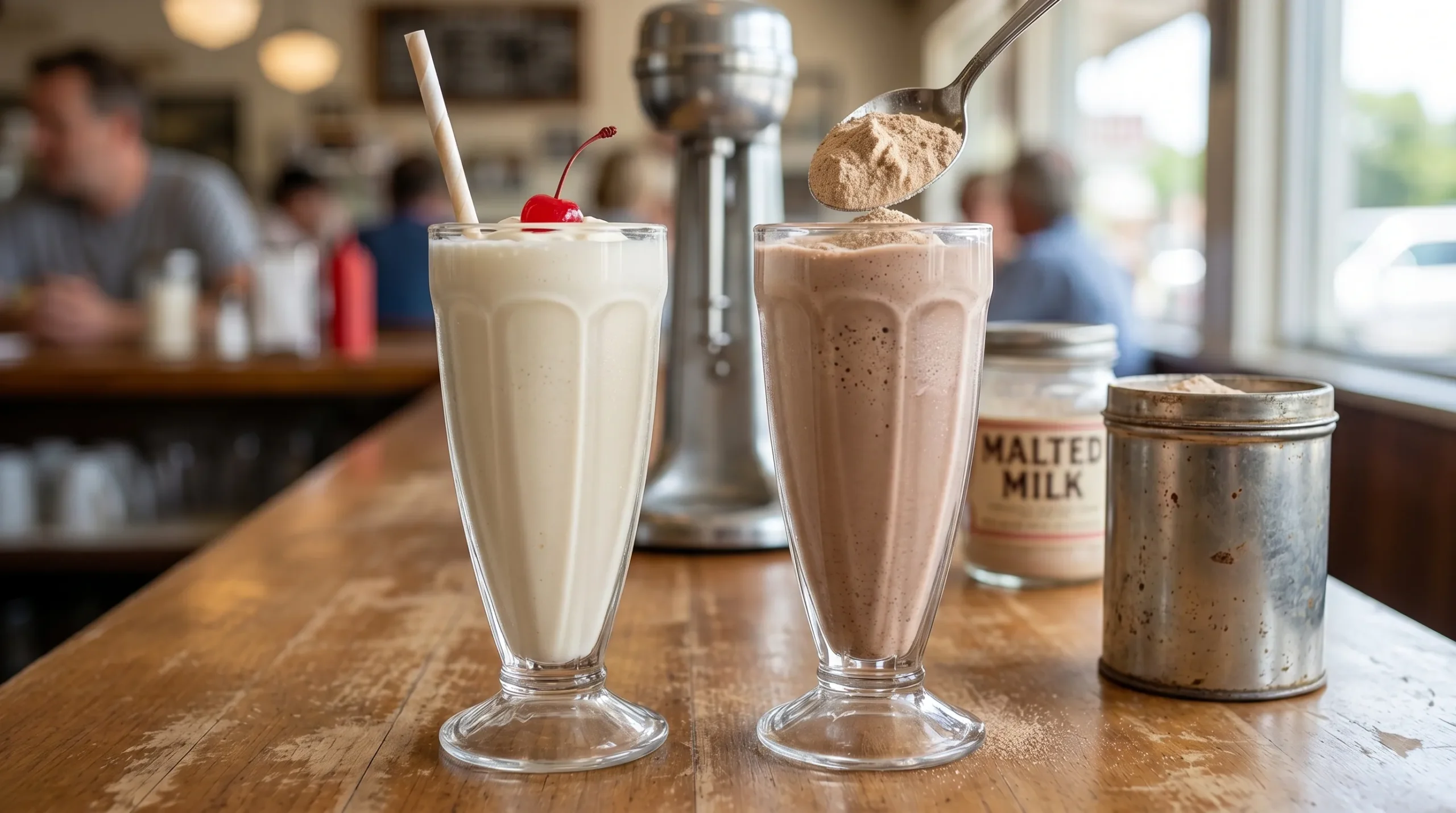
What’s the difference between a malt and a shake? The simplest answer is this: a malt is a milkshake with malted milk powder added. That one extra ingredient gives a malt its more toasty, nutty, richer flavor, and it can also make the drink feel a little thicker and more layered than a standard milkshake. Sources across Food Network, WebstaurantStore, Freddy’s, and MasterClass all center on that same core distinction, even when they explain it in slightly different ways.
But while the short answer is easy, the full story is a lot more interesting. Once you understand what malted milk powder is, how it changes taste and texture, and why malts became such a classic part of old-fashioned soda fountains and retro diner culture, the difference becomes much clearer. And if you are trying to decide what to order, knowing the difference between malt vs shake can save you from getting a drink that tastes nothing like what you expected.
In this guide, you will learn what is a milkshake, what is a malt, how malted milk powder changes flavor, whether malts are thicker than milkshakes, how they compare in taste, calories, and ingredients, and which one you should choose.
The Quick Answer Most People Want
If you are in a hurry, here is the quick version. A shake is usually made by blending ice cream and milk with flavorings like vanilla, chocolate syrup, strawberry syrup, or mix-ins such as crushed cookies, chocolate chips, or candy pieces. A malt milkshake starts with that same base, then adds malted milk powder. That powder changes the drink’s flavor from simply sweet and creamy to something a little more toasted, slightly earthy, and often more nostalgic.
So when people ask, “is a malt just a shake with powder added?”, the honest answer is yes—but that powder matters a lot. It is the reason a malt tastes more complex than a standard shake. For some people, that extra depth is exactly what they love. For others, especially someone trying one for the first time, a plain milkshake may feel more familiar and straightforward.
What Is a Milkshake?
A milkshake is a classic blended dessert drink made with some combination of ice cream, whole milk, and flavoring. The texture can range from thin and sippable to thick enough that you need a spoon first and a straw later. At its most basic, a shake is all about sweetness, creaminess, and easy customization. That is why menus often feature familiar versions like vanilla, chocolate, strawberry, and cookies and cream.
Over time, shakes became a flexible dessert format. You can add fruit syrups, fudge, brownies, hot fudge, peanut butter sauce, peanut butter candy pieces, or whatever the shop wants to feature. At a burger joint, local scoop shop, or fast-food chain, the shake is usually the familiar choice because people already know what they are getting: a cold, sweet, creamy dessert.
That is also why the comparison of malt vs milkshake confuses so many people. A shake feels like the “default,” while a malt sounds like something extra or even like a completely different drink. In reality, the relationship is much closer than that.
What Is a Malt?
A malt is a malted milkshake. It begins as a regular shake, then gets blended with malted milk powder. That is why many menus do not list it as an entirely separate category. Instead, they may offer a standard shake and let you add malt. Freddy’s, for example, frames the choice in exactly that practical, menu-based way.
This is why the core phrase “difference between a malt and a shake” has such a simple answer and such a nuanced one at the same time. The simple answer is the ingredient. The nuanced answer is that the ingredient changes the entire experience. A malt often tastes a little more rounded, a little less one-note sweet, and a little more “classic soda fountain.” If a shake is direct and dessert-like, a malt feels like dessert with personality.
For many people, the first malt they try is either a vanilla malt or a chocolate malt. Those are usually the easiest entry points because the familiar flavor base lets the malted milk powder shine without making the drink too busy.
What Is Malted Milk Powder, Exactly?
To really understand what’s the difference between a malt and a shake, you have to understand what is malted milk powder. Competitor sources consistently describe it as a powder made from ingredients like malted barley, wheat flour, and milk components such as evaporated whole milk or similar milk solids. That combination is what gives malt its recognizable flavor.
The important part for the average reader is not just the ingredient list. It is the taste effect. Malted milk powder brings in a flavor that people often describe as toasty, nutty, slightly savory, and more layered than plain sugar-and-cream sweetness. Some sources even frame it as a subtle umami-like depth, especially compared with the straightforward sweetness of a standard shake.
That is also why people sometimes love malts instantly or need a little time to warm up to them. If you expect a malt to taste exactly like a milkshake, it may surprise you. If you want something richer and more interesting, that surprise is usually a good one.
There is one more practical point here: because malted milk powder commonly includes barley and wheat flour, it may matter to anyone thinking about gluten sensitivities or ingredient restrictions. That does not mean every product is identical, but it is a good reason to check ingredients if that applies to you.
Malt vs. Shake: The Main Differences at a Glance
The biggest difference in malt vs shake comes down to ingredient, flavor, and texture.
First, the ingredient difference is simple. A regular milkshake is usually just the shake base: ice cream and milk plus flavoring. A malt includes that same base plus malted milk powder.
Second, the flavor difference is what most people actually notice. A shake is sweet, creamy, and familiar. A malt tastes sweet too, but it also has more toasty flavor, more mellow nuttiness, and a little more depth. It is not bitter, but it is less plain-dessert sweet than a shake. Think of it as the difference between vanilla ice cream and vanilla ice cream with an extra warm, toasted note blended in.
Third, the texture difference is real, although it is sometimes overstated. People often ask, “are malts thicker than milkshakes?” In many cases, yes, they can feel somewhat thicker or fuller, especially depending on how much powder is added. But texture also depends on the shop, the amount of milk used, and how the drink is blended. So it is more accurate to say that a malt often feels thicker and a little more substantial, not that every malt will always be dramatically thicker than every shake.
Finally, there is the experience difference. A shake feels modern, familiar, and broadly appealing. A malt feels more old-school, more retro diner, and more specific in taste. That is why some people strongly prefer one over the other.
Taste and Texture: How a Malt Actually Compares to a Shake
This is the part readers usually care about most. Does a malt taste different from a milkshake? Absolutely.
A standard shake is mostly about sweet creaminess. The flavor you choose—like chocolate, vanilla, or strawberry—usually dominates. The drink tastes exactly how most people expect dessert to taste: rich, smooth, cold, and sweet.
A malt still tastes creamy and sweet, but the malted milk powder adds what many people describe as a richer taste, a more toasted flavor, and a slightly nuttier finish. Some people even notice a faint cereal-like or bakery-like warmth in the background. That is why terms like toastier, nuttier, and richer treat show up repeatedly in competitor content and even in casual Reddit-style discussion.
Texture can shift too. If you are comparing the same flavor side by side, the malt may feel a bit denser, more velvety, and a little less airy. That is not magic. It is simply the result of adding powder to the drink. The best way to think about it is this: a shake is smooth and creamy, while a malt is smooth, creamy, and just a little more grounded.
A malt is not better than a shake by default. It is just more distinctive.
That is the real answer most readers need.
Quick Comparison Table: Malt vs. Shake
| Feature | Shake | Malt |
| Base | Ice cream and milk | Ice cream and milk |
| Extra ingredient | None required | Malted milk powder |
| Taste | Sweet, creamy, familiar | Sweet, toasty, slightly nutty, richer |
| Texture | Creamy | Creamy, often a bit thicker |
| Best first flavor | Vanilla, chocolate, strawberry | Vanilla malt or chocolate malt |
| Vibe | Everyday dessert | Old-fashioned soda fountain classic |
| Good for | Readers who want a classic sweet treat | Readers who want more flavor depth |
If you are also comparing other drinks, keep in mind that a float is different again because it includes soda, while a malt milkshake is still firmly in the shake family.
A Short History of the Malt
Part of the charm of the malt is that it carries a real sense of history. WebstaurantStore traces the roots of malted milk back to 1882, when William Horlick turned malt into a powder and combined it with milk-based ingredients. Later, in 1922, Ivar “Pop” Coulson reportedly added ice cream to malted milk and created the first-ever malted milkshake.
Whether a modern customer knows those names or not, that history still shapes how the drink feels today. A malt is tied to old-fashioned soda fountains, classic diners, and the kind of dessert culture that existed before endless menu add-ons became normal. That is one reason malts often feel more nostalgic than shakes. They are not just a flavor choice. They are part of an older American dessert tradition.
Does a Malt Have More Calories, Sugar, or Gluten?
This is one of the most useful questions competitors barely address. In general, a malt may have slightly more calories or sugar than a similar shake if the only difference is that extra scoop of malted milk powder. But the exact nutrition depends much more on the restaurant, size, and flavor than on the word “malt” alone.
For example, a huge frozen custard malt loaded with toppings will differ far more from a small plain shake than a simple malt-vs-shake comparison would suggest. So the smartest way to think about malt vs shake calories or malt vs shake nutrition is this: the powder adds something, but the total drink build matters more.
Where malt does make a clearer difference is allergens. Since malted milk powder often includes barley and wheat flour, it may not fit a gluten free diet. And since it is milk-based, dairy is also part of the equation. Anyone concerned about malt allergen information should check the exact product or restaurant ingredients rather than assuming all malts are the same.
How to Order a Malt if You’ve Never Tried One
If you have never ordered one before, keep it simple. Start with a vanilla malt or chocolate malt. Those are the easiest flavors for a first-time malt because you already know what the non-malt version tastes like. That makes the difference easier to notice.
At many restaurants, especially places known for shakes, the menu may not spotlight malts as a separate headline item. Instead, you may need to ask whether they can add malt to a shake. That is why the question “can you add malt to any shake?” comes up so often. In many places, yes—you can. But it depends on whether the shop has malted milk powder on hand.
A good first-time strategy is to order the flavor you already like best as a normal shake on one visit and as a malt on the next. That side-by-side memory helps you notice the change in flavor profile more clearly.
Can You Make a Malt at Home?
Yes, and it is much easier than many people think. WebstaurantStore even shares a basic build using 2 scoops vanilla ice cream, 3 Tablespoons chocolate syrup, 1/2 cup whole milk, and 1 Tablespoon malted milk powder, with a yield of 2 servings.
That recipe format matters because it shows how little you need to transform a shake into a malt. The core process is still simple: add your ingredients to a blender or milkshake machine, blend until creamy, then top with whipped cream or a cherry if you want the full soda-fountain effect.
If you are making one at home for the first time, go with vanilla or chocolate before experimenting with heavier mix-ins. Too many extras can hide the actual flavor of the malt, which defeats the purpose.
Frequently Asked Questions
Is a malt thicker than a shake?
Often, yes. A malt can feel a little thicker because of the added malted milk powder, though exact texture still depends on how the drink is made.
What does malted milk powder taste like?
It usually tastes toasty, slightly nutty, a little richer, and less purely sweet than a regular shake base.
Does a malt contain gluten?
It can, because many malted milk powders include barley and wheat flour. Check ingredients if that matters to you.
Can any shake be turned into a malt?
In many places, yes. If the shop has malted milk powder, they can often add it to the shake flavor you already want.
What is the best flavor for a first-time malt?
Most people should start with vanilla malt or chocolate malt because those flavors make the malt note easy to understand.
Are malts still popular today?
Yes, especially in places that lean into diner, burger joint, or frozen custard culture. They may feel old-school, but they are still very much around.
Which One Should You Choose?
If you want the classic dessert experience, go with a shake. It is sweet, creamy, familiar, and easy to love. But if you want something with more character—something a little toastier, a little richer, and more connected to the world of old-fashioned soda fountains—choose a malt.
That is the real answer to what’s the difference between a malt and a shake. It is not just one extra ingredient on paper. It is a different flavor experience. And once you know that, ordering the right one becomes a lot easier.
Disclaimer:
This article is for general informational purposes only and explains the basic difference between a malt and a shake. Ingredients, taste, texture, nutrition, allergens, and preparation methods may vary by recipe, brand, or restaurant, so always check product details if you have dietary concerns.