
 By Admin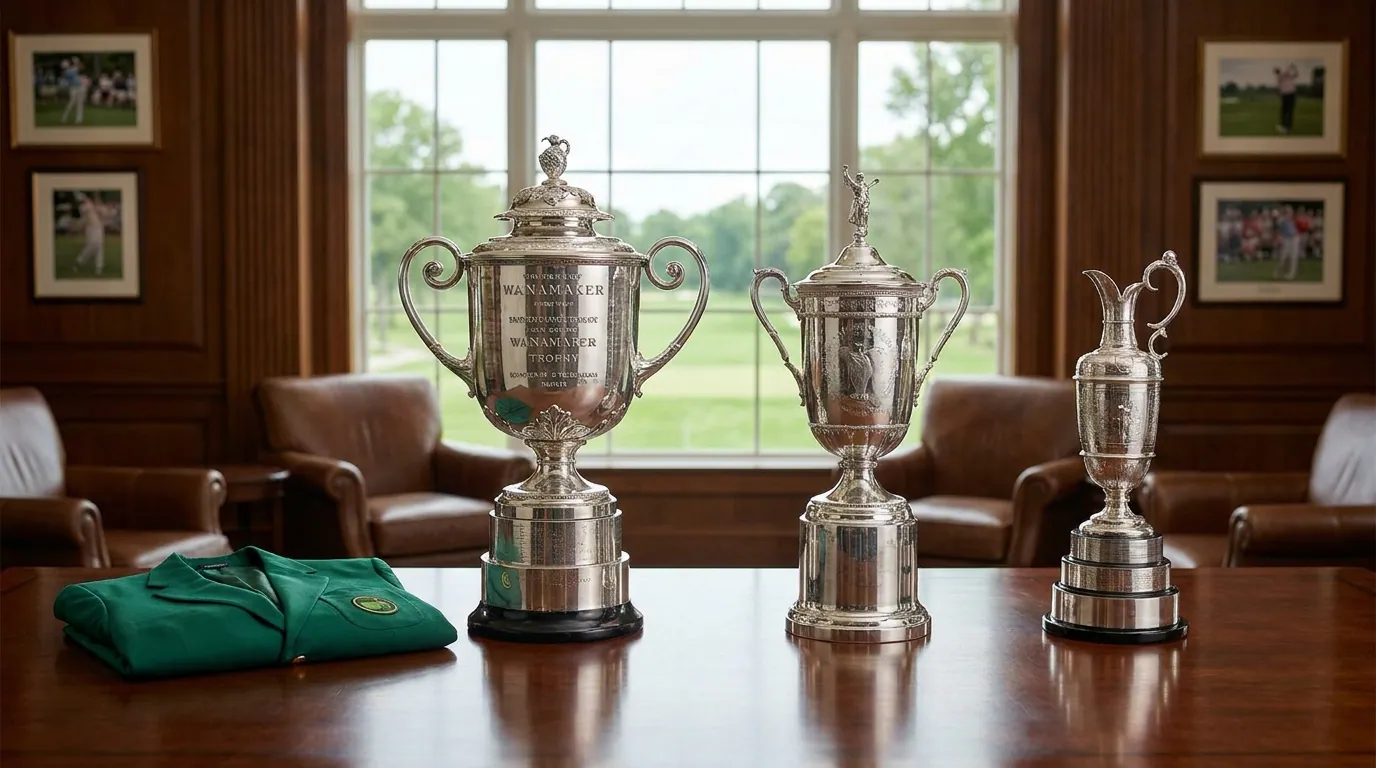
What are the 4 majors golf fans always talk about? They are The Masters, PGA Championship, U.S. Open, and The Open Championship. These are the four men’s major golf championships, and together they represent the most prestigious titles in the sport. In the modern calendar, they are played in order from April to July: The Masters in April, PGA Championship in May, U.S. Open in June, and The Open Championship in July.
If you searched what are the 4 majors in golf, you probably want a simple answer first. But most readers also want to know why these four tournaments matter so much, how they differ, which one is the oldest, who runs them, and whether the British Open is the same as The Open. This guide covers all of that in one place, in a simple, readable format. It also clears up a few common beginner questions, like whether The Players Championship counts as a major and what a Career Grand Slam really means.
Quick Answer: What Are the Four Major Golf Tournaments?
Here is the direct answer. The four major golf tournaments are:
- The Masters
- PGA Championship
- U.S. Open
- The Open Championship
These are the events people mean when they talk about golf majors, major golf tournaments, or major championships in golf. They are the biggest titles in the men’s professional game, and winning even one can define a player’s legacy. Winning all four over a career is one of the rarest achievements in sports.
The 4 Golf Majors in Order
One of the most common long-tail searches is essentially what are the four golf majors in order. The answer is straightforward:
| Order | Tournament | Typical Month | Key Identity |
| 1 | The Masters | April | Only major played at the same course every year |
| 2 | PGA Championship | May | Golf’s only all-professional major |
| 3 | U.S. Open | June | Known for difficult course setups |
| 4 | The Open Championship | July | Golf’s original championship |
This order matters because the golf majors by date shape the rhythm of the season. The Masters official site says the tournament has been scheduled during the first full week in April since 1940. The PGA Championship is contested each May and describes itself as the second major championship in golf’s annual rotation. The Open’s official site notes that the 2026 championship at Royal Birkdale runs in July, which reinforces the familiar April-to-July sequence fans expect each year.
Why These Four Tournaments Are Called Golf’s Majors
Not every famous event in professional golf is a major. What separates these four is a combination of history, prestige, global attention, tough competition, and career impact. They are the championships that shape how players are remembered. A great player may win regular tour events, but a player who wins majors enters a different conversation.
Each major also has a distinct personality. The Masters is tied to the tradition and beauty of Augusta National Golf Club. The PGA Championship is known for a deep field and the Wanamaker Trophy. The U.S. Open has a reputation for punishing setups, narrow fairways, thick rough, and firm, fast greens. The Open Championship is defined by links golf, coastal weather, and the Claret Jug. Together, those differences make the majors feel bigger than ordinary tournaments.
The Masters: Augusta National, the Green Jacket, and Golf Tradition
Among all four majors, The Masters may be the most recognizable to casual fans. The tournament was first held on March 22, 1934, and it has been played at Augusta National Golf Club ever since. That permanent home makes it unique among the four majors. Unlike the others, which move to different venues, the Masters returns every year to the same famous course in Augusta, Georgia.
The Masters is filled with traditions that make it instantly recognizable. The winner receives the Green Jacket, one of the most famous symbols in sports. Augusta is also known for Amen Corner, the stretch around the 11th, 12th, and 13th holes, and for customs like the Champions Dinner. These details help explain why so many fans see the Masters as more than just a tournament. It feels like a yearly ritual.
The Masters is also tied to some of golf’s biggest names and biggest numbers. Jack Nicklaus won a record 6 Masters victories, and the event’s history is linked to Bobby Jones, one of Augusta National’s founders. When people ask what makes the Masters special or why Augusta National is unique, the answer is really a mix of place, tradition, and memory. That combination is hard for any other event to match.
Quick fact: The official Masters site describes the event as being staged during the first full week of April, a detail many fans now associate with the unofficial start of major season.
PGA Championship: The Wanamaker Trophy and the Deepest Fields in Golf
The PGA Championship is the second major of the year and one of the most important titles in professional golf. Its official site calls it golf’s only all-professional major, which is one reason it is often described as having one of the strongest fields in the men’s game. The PGA Championship is organized by the PGA of America, not by the PGA Tour, which is an important distinction many beginner articles miss.
The tournament has been played since 1916, and the winner receives the Wanamaker Trophy, one of the sport’s classic awards. Unlike the Masters, the PGA Championship moves between major courses around the United States. That rotating-venue model helps give the event a fresh identity each year, even while the trophy and the title stay constant.
This is also a useful place to answer a frequent gap query: who runs the PGA Championship? The answer is the PGA of America. That helps explain the event’s identity, branding, and place in the golf calendar. For readers searching major championships in golf and trying to understand the structure behind them, this one detail adds a lot of clarity.
U.S. Open: The Toughest Test in American Golf
The U.S. Open is often described as the hardest test among the majors. The first United States Open Championship was played in 1895 at Newport Golf Club in Rhode Island, and the championship is run by the USGA, or United States Golf Association. That makes it older than both the Masters and the PGA Championship.
What separates the U.S. Open is its style. This championship is famous for difficult course setups, demanding rough, narrow landing areas, and fast greens that punish mistakes. It moves to elite venues across the country, which adds to the sense that the U.S. Open is a national championship rather than a single-site tradition.
The tournament also has deep historical roots. One of the most famous early moments came in 1913, when Francis Ouimet, a 20-year-old amateur, won in a result that helped grow golf’s popularity in the United States. That is why the U.S. Open feels bigger than just another trophy event. It combines history, difficulty, and national importance in one package.
The Open Championship: Why It’s Called The Open and Not Just the British Open
The fourth major is officially called The Open Championship, although many fans still call it the British Open. If you are searching The Open vs British Open, the simple answer is that they refer to the same event, but The Open is the official name used by the championship itself. The Open’s official site repeatedly calls it golf’s original championship, which is a major clue to why the event carries so much prestige.
The Open dates back to 1860, making it the oldest major in golf. The championship is closely tied to links courses, wind, weather, firm turf, and creative shotmaking. Its official records trace the first Open to Prestwick in 1860, and its modern pages still emphasize its coastal identity and history. The winner receives the Claret Jug, one of the most iconic trophies in sports.
This is also where golfers face conditions that feel very different from the American majors. The Open is not just another event on a different continent. It is a different style of golf entirely. That is why why The Open is played on links courses is such a strong supporting topic for topical authority: it helps readers understand not just the name of the event, but its character.
How the Four Majors Differ From Each Other
A lot of readers already know the names but still want to understand the differences between the four golf majors. The easiest way to think about it is this: the four events award similarly important titles, but they feel completely different.
| Major | Main Difference | Organizer / Identity | Famous Symbol |
| The Masters | Same course every year | Augusta National tradition | Green Jacket |
| PGA Championship | All-professional field | PGA of America | Wanamaker Trophy |
| U.S. Open | Toughest setup | USGA national championship | U.S. Open Trophy |
| The Open Championship | Links golf and weather | Golf’s original championship | Claret Jug |
If you want a short answer to who hosts each golf major, the table above covers the big picture. The Masters is uniquely tied to Augusta National, the PGA Championship is run by the PGA of America, the U.S. Open is run by the USGA, and The Open presents itself as golf’s original championship, administered within that historic framework.
Which Golf Major Is the Oldest and Which Is the Newest?
This is one of the best missing headings because readers ask it all the time. The oldest major in golf is The Open Championship, which began in 1860. The newest major is The Masters, first played in 1934. In between those two came the U.S. Open in 1895 and the PGA Championship in 1916.
That timeline matters because it explains why the majors feel so different from one another. The Open carries deep historical weight. The U.S. Open reflects the rise of championship golf in America. The PGA Championship reflects the professional side of the sport. And the Masters, while younger, has built an unmatched sense of tradition through continuity and presentation.
How Golfers Qualify for the Majors
Another common question is how golfers qualify for each major. The short answer is that each major has its own system, but the main routes usually include past champions, high world ranking, strong recent results, and specific qualifying events. The Open’s 2026 page, for example, highlights the Open Qualifying Series, Regional Qualifying, Final Qualifying, and even a Last-Chance Qualifier.
This matters because the four majors do not all feel the same in terms of access. The Masters traditionally has an exclusive field, the U.S. Open is famous for broad qualifying access, and the other two majors use a mix of exemptions and performance-based entry. So when readers search Masters qualification, U.S. Open qualification, PGA Championship qualification, or The Open qualification, they are really asking how each championship defines merit and opportunity.
Has Anyone Won All Four? Understanding the Career Grand Slam
Winning all four majors over a career is called the Career Grand Slam. It is one of the most respected achievements in golf because it proves a player could win across different conditions, different venues, and different styles of championship golf. According to USGA records, players who completed wins across the U.S. Open, The Open Championship, Masters, and PGA Championship include Gene Sarazen, Ben Hogan, Gary Player, and Jack Nicklaus.
This is why the majors matter so much in golf history. A player can win many tour events, but major titles carry disproportionate weight. They shape debates about greatness, legacy, and historical standing. That is also why search interest around phrases like has any golfer won all four majors and career Grand Slam winners in golf remains strong year after year.
Are the Men’s Majors Different From the Women’s Majors?
Yes. The four tournaments in this article are the men’s major golf championships. That detail is important because some beginners assume golf has one universal set of majors. In reality, men’s and women’s golf have different major-championship structures. So if someone asks what are the 4 men’s golf majors, the four listed here are the correct answer, but that is not the same as asking what are the women’s golf majors. This clarification helps make the article more useful for first-time readers and avoids a very common source of confusion. The men’s classification is the framing used on the widely cited major-championship reference pages.
Is The Players Championship a Major?
No, The Players Championship is not one of the four majors. It is a very important event and often praised for a strong field, but it does not belong to the recognized list of The Masters, PGA Championship, U.S. Open, and The Open Championship. That distinction matters because many casual fans hear people talk about The Players as if it sits on the same level. It is elite, but it is not officially a major. The official major pages and championship sites consistently define the majors as those four events only.
Common Questions About Golf’s Four Majors
Here are a few fast answers to the questions people ask most often:
What are the four majors in golf?
They are The Masters, PGA Championship, U.S. Open, and The Open Championship.
Which golf major is played at Augusta every year?
The Masters is played at Augusta National Golf Club every year, making it the only major with a permanent home.
Is the British Open the same as The Open?
Yes. The Open Championship is the official name, while British Open is the more informal term many fans still use.
Which major is oldest?
The Open Championship is the oldest, dating back to 1860.
Which major is newest?
The Masters is the newest of the four, first played in 1934.
Conclusion: Why the Four Majors Define Golf Greatness
So, what are the four majors in golf? They are The Masters, PGA Championship, U.S. Open, and The Open Championship. That is the basic answer, but the bigger truth is that each one carries its own history, identity, and challenge. The Masters brings Augusta National, the Green Jacket, and tradition. The PGA Championship brings the Wanamaker Trophy and a powerful professional field. The U.S. Open brings the USGA and golf’s toughest setups. The Open brings links golf, the Claret Jug, and the weight of being golf’s original championship.