
 By Admin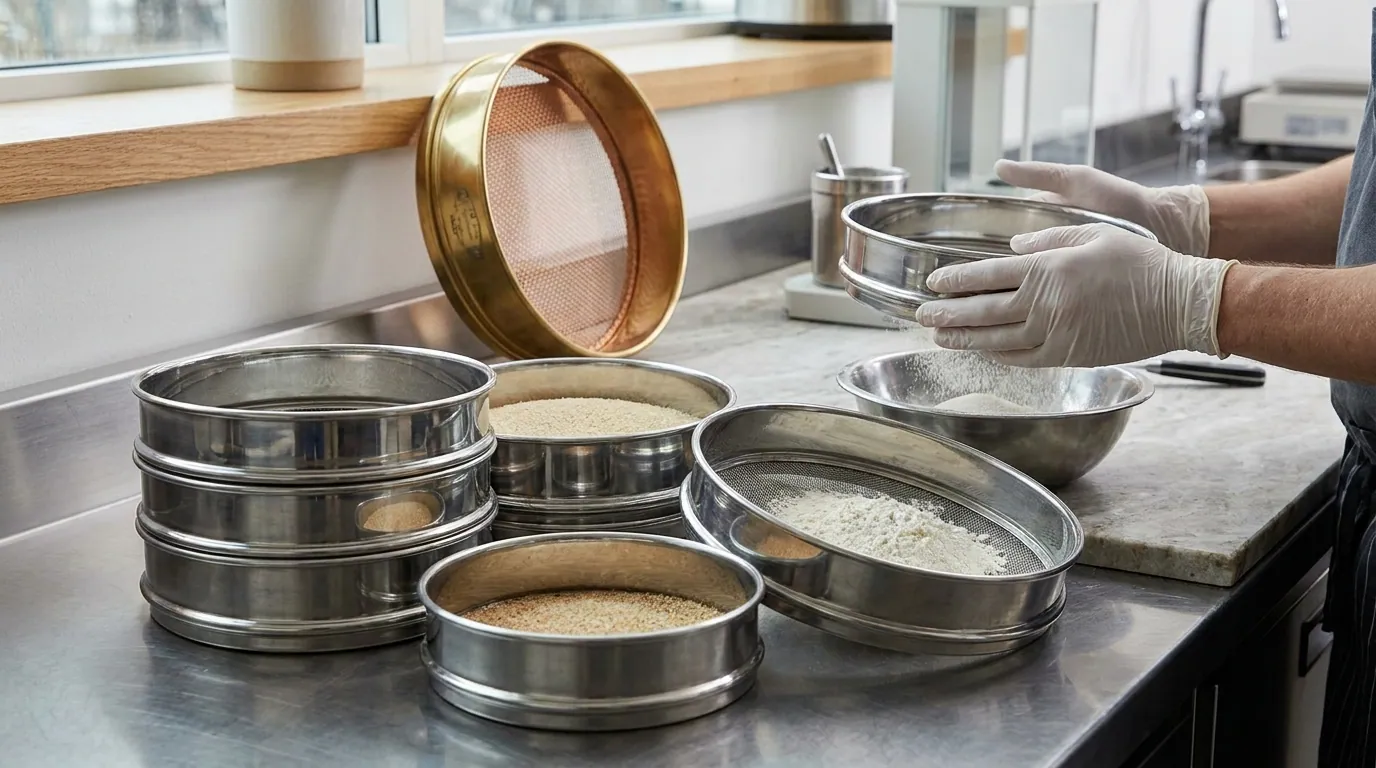
Metal used for making the sieve is usually stainless steel, and that is the short answer most readers are looking for. In modern kitchens, laboratories, pharmaceutical settings, and many industrial applications, stainless steel has become the standard because it is durable, corrosion-resistant, easy to clean, and suitable for both dry sieving and wet sieving. That said, not every sieve is made the same way. Some use brass, some combine a brass frame with stainless steel mesh, and specialty designs may use other materials depending on the job.
That is why this topic deserves more than a one-line answer. When people search for the best metal for making a sieve, they are often really asking several questions at once: What is the standard material? Why is it preferred? Is brass still used? Does the frame use the same material as the mesh? Which metal is best for food use, lab work, or ceramics? Once you look at competitor content and technical sources, the pattern is clear: stainless steel is the leading choice, but the “best” sieve still depends on the material being sifted, the environment, and how precise the result needs to be.
What Metal Is Used for Making a Sieve? The Short Answer
If you want the direct answer, the metal used for making a sieve is most commonly stainless steel. It is widely used in test sieves, food-grade sieves, laboratory sieve systems, and industrial screening tools because it holds up well over time and resists rust better than older alternatives. Some manufacturers still offer brass sieves or mixed-material designs, but stainless steel sieve construction is now the dominant option in most modern settings.
This is also where many readers get confused. A sieve is not always made from one single material throughout. In some products, the frame may be made from brass, while the mesh is made from stainless steel wire cloth. In others, both the frame and the mesh are stainless steel. So when someone asks about the sieve metal, the more accurate answer is that stainless steel is the most common overall material, especially for the actual filtering surface, but some older or specialized sieves still include brass.
Why Stainless Steel Is the Most Common Sieve Material
The biggest reason stainless steel dominates the market is simple: it performs well in the real world. A sieve deals with friction, moisture, repeated cleaning, and in some cases, demanding testing standards. Stainless steel mesh can handle those conditions better than many alternatives because it offers strong corrosion resistance, good mechanical strength, and reliable long-term performance. Sources focused on test sieves repeatedly emphasize that stainless steel works especially well for wet sieving applications, food applications, and pharmaceutical applications, where contamination resistance matters.
Another reason is hygiene. In any process involving food powders, flour, pharmaceuticals, or fine laboratory materials, users want a non-reactive metal sieve that is easier to sanitize and less likely to degrade. That makes food-grade stainless steel sieve designs especially appealing. A rust-resistant sieve is not just convenient; it also helps maintain consistency and protects the integrity of the material being screened.
There is also a durability advantage. Some sources note that brass mesh deteriorates more quickly than stainless steel, especially when exposed to humidity or long-term use. That does not mean brass is useless. It simply means stainless steel is better than brass for sieves in many modern applications where lifespan, cleanliness, and repeatable results matter most.
Practical takeaway: If you need one answer for most modern uses, stainless steel is the best material for sieve construction because it balances strength, rust resistance, easy cleaning, and accuracy.
Stainless Steel vs Brass Sieves: What’s the Difference?
The comparison between stainless steel vs brass sieve options is one of the most important parts of this topic. Historically, brass laboratory sieves were common, and some technical pages still reference them. Brass can still be found in certain test sieves, especially where traditional specifications or older equipment styles are involved. But the broader trend is clear: stainless steel test sieves have largely overtaken brass in many markets.
Here is the difference in plain language:
| Feature | Stainless Steel Sieves | Brass Sieves |
|---|---|---|
| Corrosion resistance | Excellent | Lower |
| Durability | High | Moderate |
| Cleaning and hygiene | Easier for food/lab use | Less ideal |
| Long-term stability | Strong | Can wear faster |
| Traditional use | Modern standard | More historical/legacy use |
| Typical setup | Stainless frame + mesh | Brass frame, sometimes SS mesh |
This difference becomes even more important in wet sieving, humid environments, or processes involving chemicals. Newark’s material comparison points out that certain construction methods and materials are better suited to demanding use, while W.S. Tyler’s comparison explains why stainless steel became more practical for long-term use than brass.
Brass is not without value, though. It still appears in some brass frame designs, and in specialized contexts it may remain acceptable. Some sources also mention phosphor bronze, red brass, yellow brass, and older alloy traditions. But for most readers asking, “Which metal is used for making sieve?”, the answer remains the same: stainless steel is the better all-purpose choice.
What Parts of a Sieve Are Made of Metal? Frame vs Mesh Explained
One of the biggest missed explanations in competitor content is the difference between the sieve frame and the sieve mesh. This matters because the answer to “What metal is used for making a sieve?” changes slightly depending on which part you mean.
The frame is the outer structure that holds everything together. The mesh is the filtering surface that actually performs the separation. In many modern products, both parts are made from stainless steel. In other designs, the frame may be brass while the mesh is still stainless steel mesh. Gilson’s product descriptions explicitly reference round metal frames of stainless steel or brass and mesh woven from stainless steel or brass wire, which confirms that mixed-material construction is a real and common design option.
That means the best way to explain parts of a sieve is this:
- The frame provides strength and shape.
- The mesh determines the filtering size and performance.
- The metal used for the mesh matters most for corrosion resistance and accuracy.
- The metal used for the frame matters for durability, weight, and overall construction.
For most modern buyers, the most attractive setup is often stainless steel frame + stainless steel mesh because it gives a fully non-corrosive metal for sieves. But mixed designs still exist, especially in technical or legacy categories.
Best Sieve Material by Use Case
The best material for sieve construction depends heavily on where and how it will be used. A kitchen user, a lab technician, a pharmacist, and a ceramics maker may all need different things from the same basic tool.
Kitchen and food use
For kitchen work, the best metal for kitchen sieve or best metal for flour sieve is usually food-safe stainless steel. It is more hygienic, easier to wash, and less likely to react with moisture or acidic ingredients. If someone is sifting flour, sugar, spices, or straining liquids, a food-grade stainless steel sieve is usually the safest and most practical option.
Laboratory use
In labs, laboratory sieve material matters because results must be repeatable. This is where ASTM test sieves, ISO test sieves, mesh openings, and wire diameter become important. A quality control tool used for particle size distribution testing needs stable materials and precise manufacturing. That is why stainless steel test sieves dominate, although brass test sieves may still appear in some catalogs and legacy setups.
Pharmaceutical use
In pharmaceutical work, the need for cleanliness, accuracy, and resistance to contamination is even more critical. Newark highlights the relevance of stainless steel for industries with very small margins of error, which makes hygienic sieve material and corrosion-resistant sieve metal especially important here.
Ceramics and glaze use
The ceramic industry uses sieves differently. Sources like Digitalfire and Creamik focus on slurry, glaze, dry matter tests, and DIY sieve-making. In that world, stainless steel mesh type 80, 200 mesh, and 325 mesh can matter more than the frame material alone. For ceramics, the right answer is often: use a sieve with stainless steel mesh sized correctly for the material you are screening.
304 vs 316 Stainless Steel for Sieves
Once readers understand that stainless steel is the standard, the next smart question is: Which stainless steel grade for sieves is best? This is where 304 vs 316 stainless steel sieve comparisons become useful.
304 stainless steel is widely used because it offers a strong balance of durability, corrosion resistance, and cost. For many general sieve applications, especially dry use and ordinary food handling, it is perfectly suitable. 316 stainless steel, on the other hand, offers even better resistance to corrosion in harsher environments. W.S. Tyler notes that certain mesh ranges are associated with 316 stainless steel, which helps show that higher corrosion resistance can matter in more demanding setups.
A simple way to think about it is this:
- Choose 304 stainless steel for general use, routine food work, and many standard industrial jobs.
- Choose 316 stainless steel when you expect more moisture, more corrosive exposure, or stricter hygiene demands.
That makes 316 especially attractive when people need an acid-resistant sieve material or a more durable option for wet, chemical, or highly sensitive environments.
How Sieve Material Affects Durability, Rust Resistance, and Cleaning
Many people do not ask directly about maintenance, but it strongly affects buying decisions. Does a sieve rust? It can, depending on the material and how it is used. That is one reason stainless steel is preferred. A rust proof sieve is never truly magical, but stainless steel offers much better protection against corrosion and discoloration than metals like brass in many environments.
Cleaning also matters more than many buyers realize. In food settings, leftover residue can affect taste and hygiene. In labs, residue can affect results. In ceramics, trapped material can alter glaze behavior. A smoother, more chemically stable material is easier to maintain, which is why easy to clean sieve material is such a valuable but underused SEO angle.
Heat can matter too. One competitor mentions performance up to 350 degrees Fahrenheit, which reinforces that material choice is not only about mesh size but also about operational conditions.
A short case-style example makes this easier to understand:
A bakery using a brass sieve for daily flour work may find that it wears faster and requires more careful maintenance over time, while a stainless steel wire mesh sieve will usually last longer, clean more easily, and better suit repeated commercial use.
Common Mesh Sizes and What They Mean
The metal used for making the sieve is only part of the story. The other major factor is the mesh size. This determines what passes through and what stays behind. Competitor pages repeatedly mention 200 mesh, 325 mesh, mesh type 80, US #8, US #500, and wire diameter, showing that sieve performance depends on precision, not just material.
In simple terms, a higher mesh count usually means finer openings. For example, 200 mesh sieve with 200 wires per inch indicates a very fine screen. In ceramics and powder handling, those small differences can matter a lot. In food work, the right mesh helps decide whether the sieve is best for flour, powdered sugar, spice blending, or straining.
This is why how to choose sieve mesh is a separate decision from choosing the best metal. A strong sieve needs both:
- the right metal for durability and cleanliness
- the right mesh screen for sieves for the actual job
ASTM and ISO Standards for Metal Sieves
For household readers, technical standards may sound unnecessary. But for labs, industrial buyers, and professional testing environments, they matter a lot. Competitor pages reference standards such as ASTM E11, ASTM E161, ISO 565, ISO 3310-1, and AASHTO M92, all of which help define consistency in test sieves and particle sizing applications.
These standards influence mesh openings, wire diameter, tolerance, and the overall reliability of the sieve as a quality control tool. They also connect to terms like Compliance Grade, Inspection Grade, and Calibration Grade, which are especially relevant in industries where small measurement differences matter.
For everyday kitchen use, you do not need to obsess over ASTM E11. But if your goal is scientific testing or industrial screening, then the metal used for making the sieve must work alongside the correct standard, mesh size, and manufacturing quality.
How to Choose the Right Metal Sieve
If you are buying or specifying a sieve, the easiest method is to think in steps instead of chasing one universal answer.
First, ask what you are screening. Flour, powder, slurry, glaze, chemicals, and industrial particles all behave differently. Second, decide whether the work is wet or dry. Third, decide whether hygiene or food safety matters. Fourth, consider whether the environment is corrosive, humid, or demanding enough to justify a higher stainless steel grade.
In most cases, the checklist looks like this:
| Question | Best Direction |
|---|---|
| Food or kitchen use? | Food-grade stainless steel sieve |
| Lab particle testing? | ASTM/ISO stainless steel test sieves |
| Wet or corrosive conditions? | 316 stainless steel if needed |
| General dry use? | 304 stainless steel is often enough |
| Legacy or specialty setup? | Brass frame may still appear |
| Need long life and easy cleaning? | Stainless steel |
So, how to choose the right sieve material becomes much easier when you match the metal to the application. For most readers, stainless steel remains the safest default answer.
Frequently Asked Questions About the Metal Used for Making the Sieve
Is stainless steel the best metal for a sieve?
For most modern uses, yes. Stainless steel offers the best balance of durability, corrosion resistance, hygiene, and long-term value.
Are all sieves made of stainless steel?
No. Some use brass, and some combine a brass frame with stainless steel mesh. But stainless steel is the most common modern option.
What is the difference between a sieve and a strainer?
A sieve usually refers to a tool for separating particles by size, especially in lab, industrial, or precise kitchen contexts. A strainer is often used more generally in cooking. In casual use, the words overlap, but technically a sieve is usually associated more directly with mesh size and separation.
Can brass sieves corrode?
Yes. Competitor material indicates that brass mesh deteriorates more quickly than stainless steel, especially over long-term exposure.
Which metal is best for food sieves?
Usually food-safe stainless steel, because it is easier to clean and less reactive.
What metal is used for laboratory sieves?
Most modern laboratory sieves use stainless steel, although brass can still appear in some settings.
Conclusion
So, what is the final answer to the question “metal used for making the sieve”? In most modern applications, the answer is stainless steel. It is the standard because it is strong, corrosion-resistant, easy to clean, and suitable for everything from kitchen work to particle size distribution testing in professional labs.
At the same time, the full picture is more nuanced. Some sieves still use brass, some combine a brass frame with stainless steel mesh, and specialized applications may require attention to 304 vs 316 stainless steel, mesh size, and ASTM/ISO standards. But if you want the clearest and most useful takeaway, it is this: stainless steel is the most common and most practical metal used for making a sieve, while the best exact version depends on your use case, environment, and accuracy needs.
Disclaimer: This article is for general informational and educational purposes only. Material selection for sieves may vary by manufacturer, industry standards, and specific applications. Always verify material specifications, food-grade requirements, laboratory standards, and safety guidelines before purchasing, using, or testing any sieve in commercial, industrial, scientific, or food-related environments.